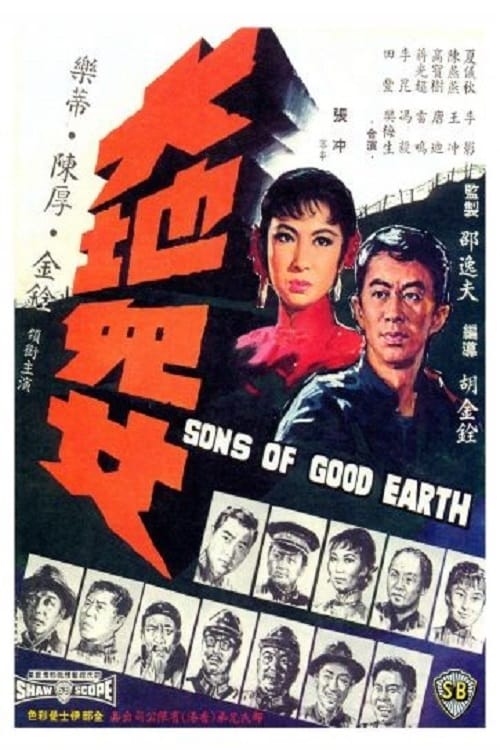
Sons of the Good Earth
Plot
The year is 1937, just prior to the Japanese invasion of China. Painters Ju Rui and Lao San stumble upon He Hua, a woman sold into the sex industry at a local brothel.
Get the Weekly Woke Watchlist
New and trending movies scored for woke bias, preachy messaging, and forced political themes — before you waste your evening.
No spam. One useful email per week.
Overall Series Review
Categorical Breakdown
The narrative is centered on a war of national resistance against a foreign invader (Japan) and local traitors (Chinese collaborators). Character value is determined by their courage and commitment to the resistance, which is a clear universal meritocracy. The casting is historically authentic for the setting. There is no element of vilification of 'whiteness' or forced diversity, as the conflict is between different Asian nationalities and loyalties.
The movie is explicitly a patriotic war drama about Chinese citizens fighting to liberate their home from a foreign occupation. The film was even honored with a special award for 'national spirit.' This focus on defending the nation, land, and community institutions against chaos is the direct antithesis of civilizational self-hatred.
The female lead is a victim of the sex industry who is rescued by the male protagonist, a clear protective masculinity trope. The central relationship leads to marriage and the formation of a family unit, which contrasts sharply with anti-natalist or 'girl boss' messaging. The score is only slightly elevated above the lowest possible due to the depiction of the woman being a victim of social/economic oppression, a theme that *could* be interpreted through a feminist lens, but in the context of a 1965 war film, it primarily serves as a narrative device for male protection and domestic stability.
The core romance is exclusively a traditional male-female pairing that culminates in marriage. The plot is focused on war, resistance, and conventional morality. No elements of alternative sexualities, deconstruction of the nuclear family, or gender ideology are present or implied.
The film’s central conflict is a moral and military one between patriots, collaborators, and invaders. Morality is objective: defending the home and people against an evil invader. The narrative is focused on national spirit and human courage, not the denigration of traditional religion, specifically Christianity. Faith is not a central theme but objective moral truth is acknowledged through the fight for freedom.
Get the Weekly Woke Watchlist
New and trending movies scored for woke bias, preachy messaging, and forced political themes — before you waste your evening.
No spam. One useful email per week.