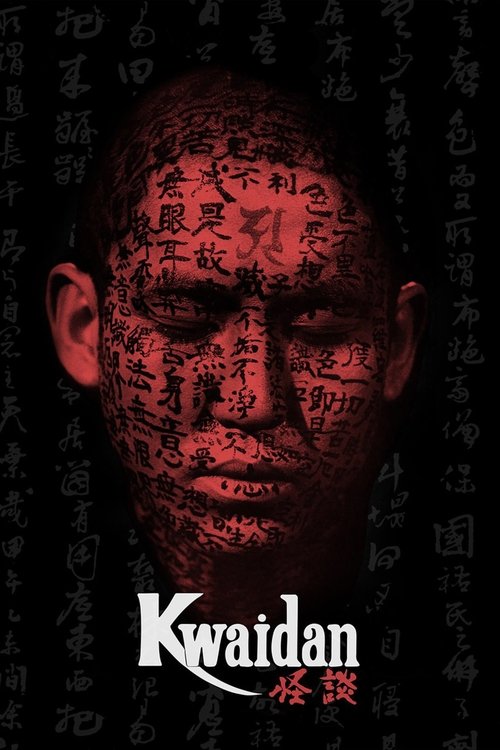
Kwaidan
Plot
Taking its title from an archaic Japanese word meaning "ghost story," this anthology adapts four folk tales. A penniless samurai marries for money with tragic results. A man stranded in a blizzard is saved by Yuki the Snow Maiden, but his rescue comes at a cost. Blind musician Hoichi is forced to perform for an audience of ghosts. An author relates the story of a samurai who sees another warrior's reflection in his teacup.
Get the Weekly Woke Watchlist
New and trending movies scored for woke bias, preachy messaging, and forced political themes — before you waste your evening.
No spam. One useful email per week.
Overall Series Review
Categorical Breakdown
The film is an all-Japanese production based on Japanese folklore, set in historical Japan, which makes racial and 'whiteness' critiques irrelevant. Character conflict is driven by personal moral failings like greed and vanity, such as the samurai's desire for wealth over fidelity, not immutable characteristics or an intersectional hierarchy. The focus remains squarely on the individual's ethical choices and the resulting supernatural retribution.
The director critiques the moral corruption and repressive culture found within feudal Japanese society and the history of militarism, but this is done through a celebratory embrace of traditional Japanese aesthetics, art, and folklore. The film reclaims and honors classic Japanese art forms, such as its theatrical styling, stunning set design, and spiritual narratives. The narrative engages critically with the failings of ancestors and institutions but maintains a clear respect and reverence for the culture's aesthetic and spiritual heritage.
The female characters, particularly the abandoned wife in 'The Black Hair' and the Snow Maiden, are powerful figures of retribution, often serving as avenging spirits for injustices suffered in their human lives. The men are consistently portrayed as morally weak, driven by ambition or lust, and suffering the consequences of their betrayal, which is a clear indictment of male moral failure. This theme elevates female characters as agents of spiritual justice, but it does not employ the 'Girl Boss' trope; instead, it focuses on the tragic consequences of failed complementarian roles and the power of a wronged woman.
The narrative is centered on traditional, albeit often failed, male-female pairings, marital fidelity, and the traditional samurai/monastic structures of historical Japan. The story structure is normative. A highly specialized, tertiary academic analysis of the final segment suggests a possible subtextual indictment of the 'erasure of homosexuality' in the male-centric Samurai world, but the overt text contains no explicit centering of alternative sexualities, gender ideology, or deconstruction of the nuclear family.
The film's world is fundamentally transcendent, with spiritual consequences for moral actions clearly demonstrated. Buddhist monks and the power of Buddhist scripture (sutras) are depicted as the essential source of protection against supernatural danger in 'Hoichi the Earless.' Spiritual faith is acknowledged as a source of power, and ghosts embody a higher moral law, acting as agents of justice when traditional morality is violated. The narrative wholly embraces the existence of a world beyond the material.
Get the Weekly Woke Watchlist
New and trending movies scored for woke bias, preachy messaging, and forced political themes — before you waste your evening.
No spam. One useful email per week.