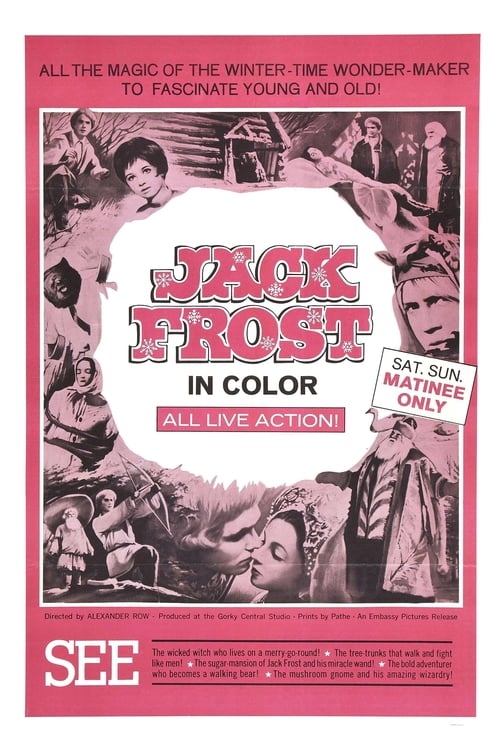
Father Frost
Plot
A fairy tale about a conceited young man and a young woman with a tyrannical step-mother, who must overcome magical trials in order to be together.
Get the Weekly Woke Watchlist
New and trending movies scored for woke bias, preachy messaging, and forced political themes — before you waste your evening.
No spam. One useful email per week.
Overall Series Review
Categorical Breakdown
Characters are judged strictly by the content of their soul, which is the definition of universal meritocracy. The plot is a moral test where kindness, humility, and patience (Nastenka) are rewarded, and vanity, selfishness, and arrogance (Ivan, stepmother, stepsister) are punished. Race or immutable characteristics play no role in defining character merit or establishing a hierarchy.
The movie is a celebration and faithful depiction of Russian/Slavic folklore, mythology, and traditional rural life. The narrative upholds core institutions like the family and champions traditional virtues. It shows respect for the culture, ancestors, and foundational stories of the home civilization, with no element of civilizational self-hatred.
The main female protagonist, Nastenka, embodies traditional virtues and finds fulfillment through a complementary pairing with the hero, Ivan. Ivan’s initial arrogance is a flaw he must overcome to prove his masculine worth. The ultimate goal is marriage and the establishment of a traditional household, celebrating a normative family structure.
The core of the romantic plot revolves around the male-female pairing of Ivan and Nastenka. The narrative structure, themes, and conclusion uphold the traditional male-female pairing and the nuclear family structure as the aspirational norm. There is no presence of alternative sexual ideologies or any deconstruction of gender or family.
The moral universe of the film is absolute; there is objective good and objective evil, and a higher moral law is enforced by the magical beings (Father Frost, Father Mushroom). The entire plot is dedicated to rewarding virtue and punishing vice, explicitly championing a transcendent moral order.
Get the Weekly Woke Watchlist
New and trending movies scored for woke bias, preachy messaging, and forced political themes — before you waste your evening.
No spam. One useful email per week.