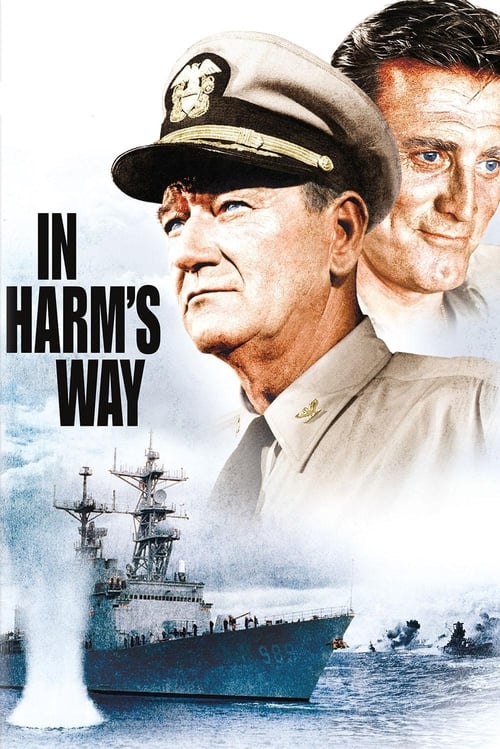
In Harm's Way
Plot
A Naval officer, reprimanded after Pearl Harbor, is later promoted to Rear Admiral and gets a second chance to prove himself against the Japanese.
Get the Weekly Woke Watchlist
New and trending movies scored for woke bias, preachy messaging, and forced political themes — before you waste your evening.
No spam. One useful email per week.
Overall Series Review
Categorical Breakdown
Characters are judged by their professional competence, courage, and personal conduct, reflecting a system of universal meritocracy. The entire cast and structure are historically authentic to the 1941 United States Navy command structure. The narrative does not utilize race or intersectional hierarchy as a lens for the plot.
The movie is fundamentally patriotic, serving as a narrative that emphasizes American duty, honor, and sacrifice during a major world conflict. The core message is about reclaiming national dignity after a surprise defeat. The only critiques are directed at specific individuals and naval bureaucracy, not a wholesale demonization of Western institutions or ancestors.
The story adheres to a normative gender structure, featuring male naval officers and female nurses or wives whose roles are distinct and complementary. While one tragic subplot involves a male officer's despicable actions toward a female character, this is portrayed as a moral failing of a single, deeply flawed man, not a systemic critique designed to emasculate men or promote the 'Girl Boss' or anti-natalist messages.
The story is entirely centered on traditional male-female relationships, including marriage, affairs, and courtship. There is zero presence of alternative sexual ideologies, queer theory, or non-normative gender identity lecturing.
The film does not overtly attack religion or frame Christianity as a source of evil. However, characters frequently display deep moral depravity, sensuality, and an absence of faith as a guiding force. The morality of the characters is largely secular and subjective, focusing on personal demons and redemption through duty rather than transcendent moral law.
Get the Weekly Woke Watchlist
New and trending movies scored for woke bias, preachy messaging, and forced political themes — before you waste your evening.
No spam. One useful email per week.