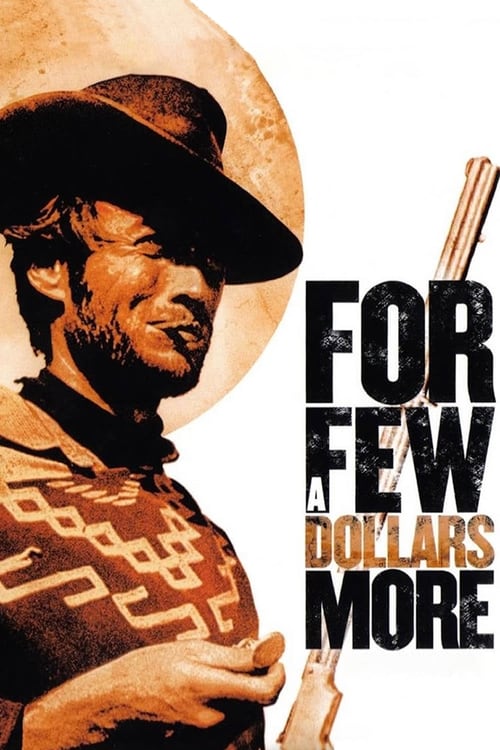
For a Few Dollars More
Plot
Two bounty hunters both pursue the brutal and sadistic bandit, El Indio, who has a large bounty on his head.
Get the Weekly Woke Watchlist
New and trending movies scored for woke bias, preachy messaging, and forced political themes — before you waste your evening.
No spam. One useful email per week.
Overall Series Review
Categorical Breakdown
Characters are judged strictly by their skill with a gun, tactical intelligence, and ability to get the job done, representing a universal meritocracy. The two protagonists are 'white' males who are highly competent, and the main villain is a complex, brutal criminal. There is no lecturing on privilege, systemic oppression, or forced insertion of diversity. The narrative revolves around individual prowess and choice.
The film does not criticize Western civilization; it presents a cynical, lawless frontier which is a common setting for the Western genre. The main characters, the bounty hunters, enforce a form of rough, free-market justice where criminals have a price. The setting is amoral, but the narrative does not frame the Western home culture as fundamentally corrupt or racist, nor does it elevate external cultures as morally superior. The focus is on the amorality of the individual, not the ideology of a civilization.
The core dynamic is a duel of hyper-competent men. The plot is driven by a male character's quest for vengeance after his sister's rape and suicide, a traditional motivation for masculine protection and justice. There are no 'Girl Boss' or 'Mary Sue' tropes. Men are depicted as either highly capable (the heroes) or ruthless/incompetent (the gang members). Women are essentially absent from the primary action and do not challenge the traditional male-female distinction.
The film has a normative structure, focused on the traditional dynamics of the male-dominated Western genre. Sexuality is not a theme, and the narrative contains no alternative sexual ideologies, deconstruction of the nuclear family, or discussion of gender theory. The only reference to a romantic relationship is in the tragic backstory that drives the Colonel's revenge.
Organized religion and Christian characters are largely absent. The morality is transcendent in the form of personal justice and an objective righting of a wrong (vengeance for a horrific crime). The characters operate under a higher moral law of their own making—the Colonel's quest for justice and Manco's pragmatic code—which stands against the moral relativism of the bandit gang. Faith is neither a source of strength nor a root of evil; the focus is on a secularized but objective moral imperative.
Get the Weekly Woke Watchlist
New and trending movies scored for woke bias, preachy messaging, and forced political themes — before you waste your evening.
No spam. One useful email per week.