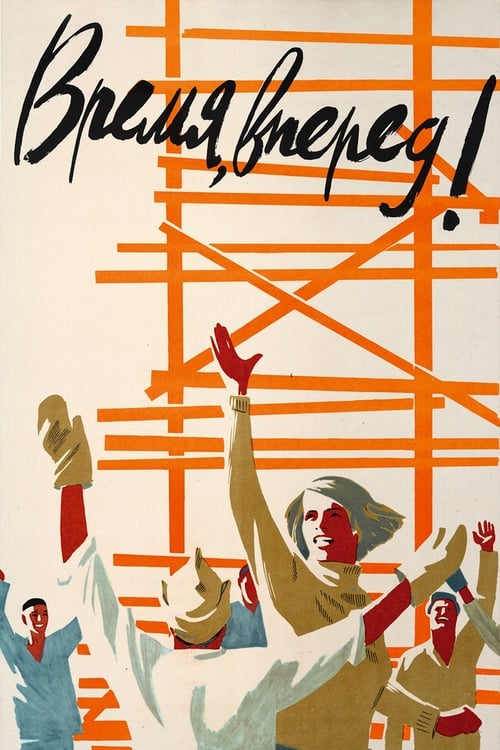
Time, Forward!
Plot
The film is set in the 1930s in the USSR. The film tells about one day of the construction of the Magnitogorsk Iron and Steel Works. The heroes of the film are simple construction workers who are burning at work. Upon learning that their colleagues in Kharkov have set a record, they mobilize to break it. The entire construction site was engulfed in immense socialist competition. The teams are ready to complete the work on time at any cost. A Moscow journalist who has come to cover the scale of the great construction project is looking for the hero of his report...
Get the Weekly Woke Watchlist
New and trending movies scored for woke bias, preachy messaging, and forced political themes — before you waste your evening.
No spam. One useful email per week.
Overall Series Review
Categorical Breakdown
Characters are judged by their commitment to work and their success in socialist competition, embodying a form of labor meritocracy. The presence of a 'multinational shock brigade' is a feature of Soviet propaganda emphasizing the unity of peoples under the socialist project, not a critique of race or an intersectional hierarchy. The focus is on the content of a worker's production, not their immutable characteristics.
The film is a fervent celebration of the new Soviet civilization and its heroic ancestors (the early Five-Year Plan workers). It views the construction of the massive steel plant as a glorious achievement and an act of extreme civic-national self-love. Hostility is directed only at shirkers and those who fail the socialist cause, not at the 'home' culture, which is framed as being built on foundational virtues of collective labor and purpose.
Female characters are prominently featured as equally capable and enthusiastic concrete workers, such as Shura Soldatova and Olya Tregubova, participating fully in intense, physical industrial labor. This portrays women as fully realized through their careers and physical competence, aligning with the 'Girl Boss' trope but focused on the factory floor. While a male worker's wife is shown going into labor, the primary source of female fulfillment is clearly the industrial work itself, not the traditional role of motherhood or family life, giving it a moderate score in the anti-natalism direction.
The entire narrative is centered on industrial construction, socialist competition, and production quotas in the 1930s USSR. The subject of sexual identity, alternative sexualities, or gender ideology is entirely absent, with all interpersonal dynamics focused on work performance and collective goals. The normative structure of male-female pairings remains the standard backdrop for personal lives.
The film operates within the framework of Soviet Socialist Realism, which is based on dialectical and historical materialism—an inherently atheistic worldview. The transcendent morality and source of all truth is the political ideology of Communism and the successful fulfillment of the Five-Year Plan. The zealous pursuit of a production record replaces traditional spiritual faith and objective moral law with the absolute ethical authority of the Party's goals, creating a spiritual vacuum filled by the ideology of labor and the State.
Get the Weekly Woke Watchlist
New and trending movies scored for woke bias, preachy messaging, and forced political themes — before you waste your evening.
No spam. One useful email per week.