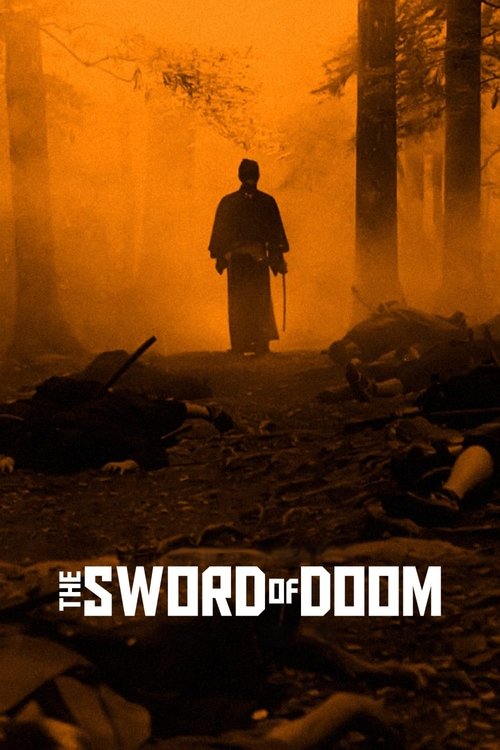
The Sword of Doom
Plot
Ryunosuke, a gifted swordsman plying his trade during the turbulent final days of Shogunate rule, has no moral code and kills without remorse. It’s a way of life that leads to madness.
Get the Weekly Woke Watchlist
New and trending movies scored for woke bias, preachy messaging, and forced political themes — before you waste your evening.
No spam. One useful email per week.
Overall Series Review
Categorical Breakdown
The movie is a Japanese period piece set in 1860s Japan, utilizing an authentic Japanese cast and historical context. The main character's moral vacuum and skill define him. He is judged by his soul's content, which is found to be evil, perfectly adhering to the principle of universal meritocracy.
The film focuses on the breakdown of traditional Japanese codes of honor (Bushido) through the protagonist's nihilistic actions. This is an internal critique of individual moral decay during a time of chaos, not a condemnation of a civilization's core values in favor of an external culture.
Gender dynamics are traditional for a tragic period film, showing the male lead as hyper-masculine (in a toxic way) and the female characters as victims of his amorality and circumstance. There are no 'Mary Sue' or 'Girl Boss' tropes, and the male lead is never emasculated. The portrayal is one of exploitation and tragedy, not ideological lecturing.
The narrative has no elements of alternative sexual ideology. Sexuality is a private matter, primarily seen through the protagonist's coercive and transactional relationship with a woman. The focus is exclusively on the main character's nihilism and descent into violence.
The protagonist, Ryunosuke, is a moral relativist and nihilist who commits an act of evil against a praying Buddhist pilgrim early in the film. However, the narrative is framed as a tale of karmic retribution. A master swordsman warns that an 'evil soul' creates an 'evil sword.' Ryunosuke's eventual descent into insanity and being haunted by the ghosts of his victims demonstrates that the film's structure enforces a transcendent, objective moral law that is broken only at the cost of one's sanity and life.
Get the Weekly Woke Watchlist
New and trending movies scored for woke bias, preachy messaging, and forced political themes — before you waste your evening.
No spam. One useful email per week.