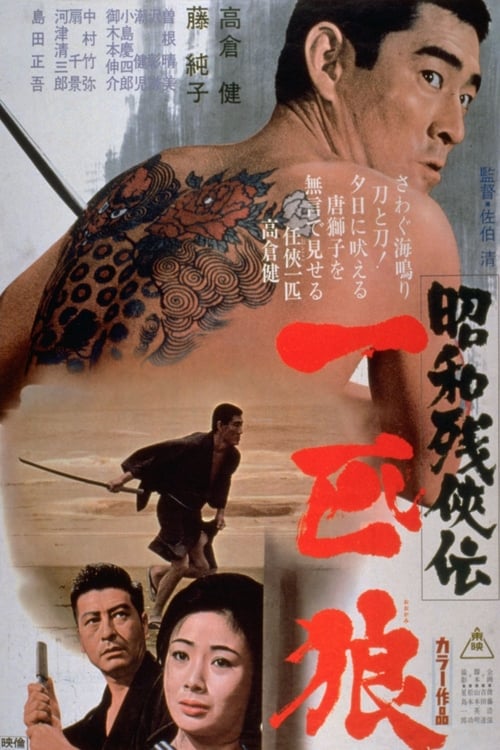
Contemporary Tales of Chivalry: The Lone Wolf
Plot
The karashi Botan returns in the third chapter of the incredible Showa Zankoden series. This time legendary actor Ken Takakura plays Takei Shigejiro of the Shimazu family. When the boss of the Shimazu is killed, Shigejiro takes revenge and is sent to jail. Upon his release, he meets the dying widow of one of hid followers and takes her to her father, Boss Shiomasa, who take him into his family. But when Shiomasa is killed by an old enemy, Shigejiro is obligated to take revenge...
Get the Weekly Woke Watchlist
New and trending movies scored for woke bias, preachy messaging, and forced political themes — before you waste your evening.
No spam. One useful email per week.
Overall Series Review
Categorical Breakdown
The film’s central conflict is based on a code of honor and duty within a Japanese yakuza world. Characters are judged by their loyalty and adherence to this code (meritocracy of the spirit), not by race or immutable characteristics. As a 1966 Japanese film, it is focused on internal Japanese culture, and the vilification of 'whiteness' or forced diversity is absent.
The film is an expression of Japanese *ninkyo* (chivalry) cinema, celebrating the traditional, 'old-school' yakuza code of honor and loyalty against the backdrop of post-war Japanese society (the Showa Era). This focus is on celebrating an internal cultural archetype and moral code, not on hostility toward Japanese culture or Western civilization.
The narrative centers entirely on the male protagonist and his adherence to a masculine code of honor and revenge. While a female character, a dying widow, is present and acts as a plot catalyst, the story structure prioritizes male-driven duty and protection. There are no 'Mary Sue' or 'Girl Boss' tropes, and the concept of motherhood or traditional female roles is handled within the historical and cultural context of 1960s Japan, without anti-natalist messaging.
As a traditional Japanese yakuza film from the mid-1960s, the narrative is solely concerned with the heterosexual and fraternal dynamics of the organized crime world. The film maintains a normative structure, and there is no focus on centering alternative sexualities, deconstructing the nuclear family, or presenting gender ideology.
The movie is a secular crime drama focused on a code of ethics and revenge. The moral framework is the yakuza's own honor code, which acts as a transcendent moral law for the characters. There is no thematic conflict or hostility directed toward any form of traditional religion, particularly Christianity or other major world faiths.
Get the Weekly Woke Watchlist
New and trending movies scored for woke bias, preachy messaging, and forced political themes — before you waste your evening.
No spam. One useful email per week.