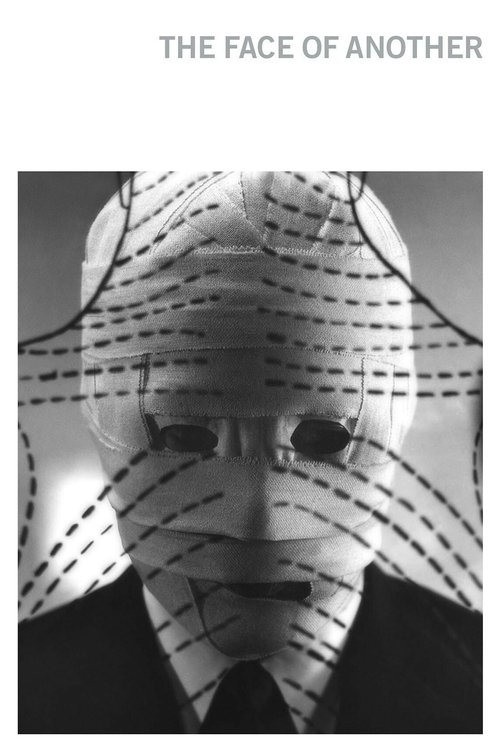
The Face of Another
Plot
A businessman with a disfigured face obtains a lifelike mask from his new doctor, but the mask starts altering his personality and causing him to question his identity.
Get the Weekly Woke Watchlist
New and trending movies scored for woke bias, preachy messaging, and forced political themes — before you waste your evening.
No spam. One useful email per week.
Overall Series Review
Categorical Breakdown
The core conflict is based on personal identity and the judgment of physical appearance/disfigurement, not an intersectional hierarchy of immutable characteristics like race or privilege in the modern political sense. The story is a critique of a society that judges a man solely on his face. The film’s focus is on the content of the soul versus the social fiction of identity. It is a Japanese film set in Japan, and the contemporary concept of 'whiteness' vilification is entirely absent.
The film does not frame Japanese culture or ancestors as fundamentally corrupt or racist. Its critique focuses on the alienation and superficiality of modern, industrial society and the lasting trauma of World War II, which caused literal disfigurement (like the nurse's scar from the atomic bombing). This is a commentary on the consequences of industrialization and war, not civilizational self-hatred. Institutions like the family are shown crumbling due to personal tragedy and trauma, not ideological deconstruction.
Gender dynamics center on a traditional male protagonist and his wife, whose role is largely defined by her relationship to him and her private suffering. The wife is not a 'Girl Boss' figure, nor is there any explicitly anti-natalist or anti-family messaging. The women in the film, including the scarred nurse in the subplot, are portrayed as victims of trauma and loneliness. The masculinity of the protagonist is not celebrated but rather disintegrates under his own moral and psychological failings.
The film focuses entirely on the traditional male-female pairing in the form of a strained marriage. There is no presence of alternative sexualities, gender ideology, or deconstruction of the nuclear family as a political statement. Sexuality is a private matter tied to the main character's attempt to use his new face for an affair, which is a key part of his moral degradation.
The narrative is a deeply metaphysical and existential enquiry into the nature of the 'soul' and 'self' rather than an attack on organized religion. The moral decay of the protagonist stems from the philosophical question of whether the mask frees him from all moral constraint, suggesting a form of moral relativism, but this is a personal exploration, not an attack on faith. There is no specific hostility toward Christianity or traditional religion.
Get the Weekly Woke Watchlist
New and trending movies scored for woke bias, preachy messaging, and forced political themes — before you waste your evening.
No spam. One useful email per week.