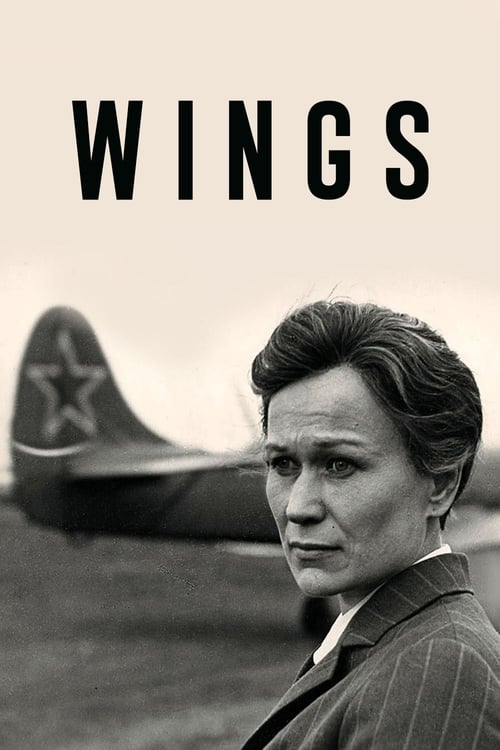
Wings
Plot
After WWII, a Soviet pilot returns to civilian life and struggles in her roles as school principal and mother, and with her memories of the war.
Get the Weekly Woke Watchlist
New and trending movies scored for woke bias, preachy messaging, and forced political themes — before you waste your evening.
No spam. One useful email per week.
Overall Series Review
Categorical Breakdown
The story is a character study of a Soviet military hero whose struggles are emotional, generational, and professional, not based on race or intersectional hierarchy. The main character is celebrated for her 'merit' as a fighter pilot. The focus on a white, non-Western European setting and conflict means the category's definition of 'vilification of whiteness' and 'forced insertion of diversity' is not applicable.
The film does not target Western civilization. Its critique is directed at the changing social and bureaucratic nature of the post-Stalin Soviet society that fails to accommodate the war hero's vitality. The protagonist's core values are 'duty to the state' and self-sacrifice from the Great Patriotic War, indicating respect for national and ancestral sacrifice. This dissatisfaction with the present system is a critique of a Soviet ideology, which does not constitute oikophobia as defined.
The main character is an accomplished pilot turned school headmistress, fitting the 'Girl Boss' archetype. Her independent, rough demeanor is shown to clash with the societal expectation of a new 'maternal role,' which is a source of her unhappiness. Her professional identity and the freedom of flight are presented as fulfilling, while her domestic and motherly roles are a source of conflict and alienation. This strongly promotes the 'career is the only fulfillment' narrative over 'motherhood is celebrated.'
The plot centers on a heterosexual war veteran, her romantic relationship with a man, and her tense relationship with her adopted daughter about her daughter's boyfriends. The narrative structure is entirely normative regarding sexuality and the family unit, despite the protagonist's personal struggle within it. The academic application of 'queer theory' to a later analysis of her 'female masculinity' is an external interpretation and not the overt theme or 'lecturing on gender theory' within the 1966 film.
As a film from the officially atheist Soviet Union, traditional religion is absent, creating a default 'spiritual vacuum' in the society. The protagonist's desperate longing for flight represents a search for transcendent meaning and a higher moral order (duty/sacrifice) that the mundane, bureaucratic present lacks. This exploration of nihilism and the spiritual void, rather than overt hostility or vilification of Christian characters, places the film slightly higher than a neutral score due to its fundamental secular-humanist foundation.
Get the Weekly Woke Watchlist
New and trending movies scored for woke bias, preachy messaging, and forced political themes — before you waste your evening.
No spam. One useful email per week.