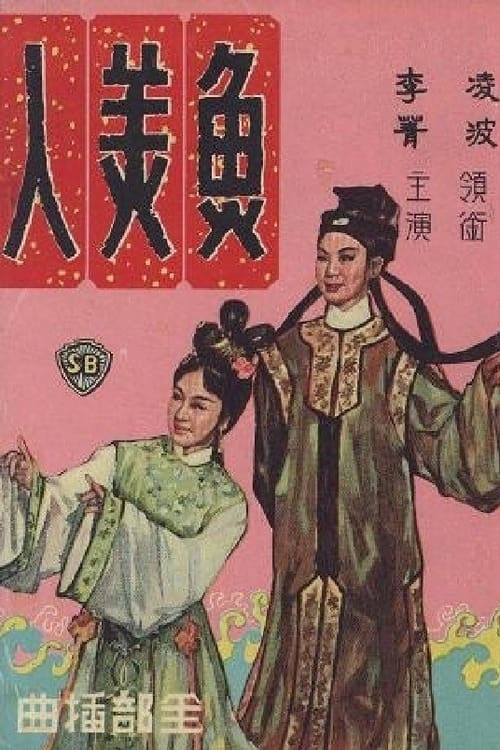
The Mermaid
Plot
A Huangmei opera produced by Shaw Brothers about a carp spirit who transforms into an identical copy of a beautiful woman to win the heart of a lonely male scholar.
Get the Weekly Woke Watchlist
New and trending movies scored for woke bias, preachy messaging, and forced political themes — before you waste your evening.
No spam. One useful email per week.
Overall Series Review
Categorical Breakdown
The narrative is entirely Chinese with no focus on race or 'whiteness.' The central conflict is a universal critique of class snobbery and materialism, where the virtuous poor scholar is pitted against the unprincipled wealthy official. Character judgment is based purely on the content of their soul—sincerity and kindness—rather than immutable characteristics or social hierarchy.
The film does not engage in civilizational self-hatred. It critiques the specific corruption and materialism of a high-ranking official's household, which is a long-standing trope in Chinese folklore. Institutions like marriage, the scholar-official system (via the Imperial Exams), and the divine order are all treated as legitimate frameworks within the traditional Chinese cultural context.
The core of the story celebrates the traditional complementary dynamic: the male scholar is a virtuous, sensitive, and protective figure, while the female Carp Spirit chooses to forsake immortality to become his devoted wife and mother of their child. The Carp Spirit is shown as having agency in pursuing the man she loves, but the ultimate goal is the domestic fulfillment of family. Motherhood is explicitly celebrated as a desired outcome.
The central romance is a normative male-female pairing leading to the formation of a nuclear family. The use of a female actress (Ivy Ling Po) to play the male scholar is a traditional stage convention of Huangmei opera (nü ban nan zhuang), a performance style, and is not used to promote gender or sexual ideology.
The plot is a fantasy deeply rooted in Chinese folk spirituality and mythology. The conflict is resolved by the direct, benevolent intervention of a major divine figure, the Goddess of Mercy (Guanyin), who ensures the virtuous couple is united. Faith and the transcendent are depicted as sources of justice and moral truth.
Get the Weekly Woke Watchlist
New and trending movies scored for woke bias, preachy messaging, and forced political themes — before you waste your evening.
No spam. One useful email per week.