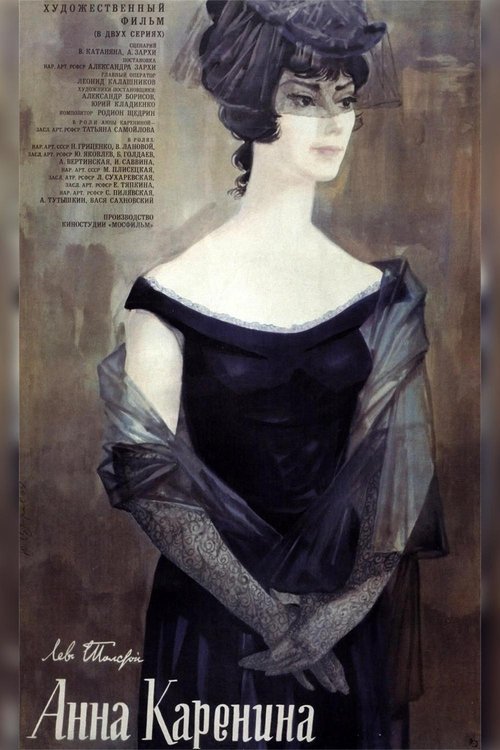
Anna Karenina
Plot
In Imperial Russia, Anna, wife of the officer Karenin, goes to Moscow to visit her brother. On the way, she meets charming cavalry officer Vronsky, to whom she's immediately attracted. But in St. Petersburg’s high society, a relationship like this could destroy a woman’s reputation.
Get the Weekly Woke Watchlist
New and trending movies scored for woke bias, preachy messaging, and forced political themes — before you waste your evening.
No spam. One useful email per week.
Overall Series Review
Categorical Breakdown
The film features an entirely ethnically Russian/Soviet cast playing historical characters from 19th-century Imperial Russian aristocracy. Casting is historically authentic to the setting and the source material, focusing on class and character merit rather than race or intersectional hierarchy. No forced insertion of diversity or vilification of whiteness exists.
The movie is a faithful adaptation of a Russian literary classic, respecting the grandeur and historical period of Imperial Russia through its production design and authentic period details. While the narrative, like the novel, critiques the superficiality and hypocrisy of the *aristocratic social system*, this is an internal criticism specific to a moral failure of the elite class, not a general hostility toward Russian culture or Western civilization.
Anna Karenina's character is not a 'Girl Boss' but a tragic figure whose life unravels after defying traditional marriage and motherhood to pursue passion. The film shows the devastating personal and social cost of her choices, with her ostracization from society serving as a consequence, not a celebration of liberation. The narrative maintains a traditional view of gender roles as they existed in the 19th century, with the consequences of breaking them forming the basis of the tragedy.
The plot centers entirely on a classic heterosexual love triangle—the adultery between Anna (a married woman) and Vronsky (a male officer). The core conflict and tragic element is the breakdown of the traditional male-female marriage and nuclear family structure (adultery), but this is presented as a tragic violation of the normative structure, not a deconstruction of it through a 'queer theory' lens. No alternative sexualities are centered or advocated for.
The novel and its adaptation are saturated with Tolstoy's complex moral and spiritual questioning. Anna's husband, Karenin, is presented as an 'orthodox Christian' official, and the societal judgment she faces is based on a conservative Christian moral code. The story critiques the *hypocrisy* of the society's moralizing without embodying hostility toward religion itself. The tragic conclusion suggests the presence of a transcendent moral order and consequences for sin, aligning with an objective moral framework.
Get the Weekly Woke Watchlist
New and trending movies scored for woke bias, preachy messaging, and forced political themes — before you waste your evening.
No spam. One useful email per week.