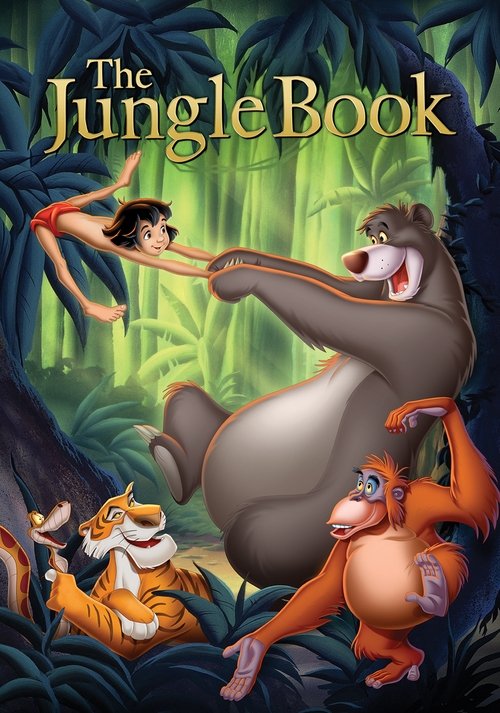
The Jungle Book
Plot
The boy Mowgli makes his way to the man-village with Bagheera, the wise panther. Along the way he meets jazzy King Louie, the hypnotic snake Kaa and the lovable, happy-go-lucky bear Baloo, who teaches Mowgli "The Bare Necessities" of life and the true meaning of friendship.
Get the Weekly Woke Watchlist
New and trending movies scored for woke bias, preachy messaging, and forced political themes — before you waste your evening.
No spam. One useful email per week.
Overall Series Review
Categorical Breakdown
The plot focuses on a universal meritocracy where a character's place is determined by their nature as a human being who belongs in the man-village. The narrative does not contain any of the modern 'woke' characteristics, such as the vilification of 'whiteness,' forced diversity, or political lecturing. Character conflicts are based on individual malice or survival, not intersectional hierarchy. While the film has been historically critiqued for racial stereotyping in the character of King Louie, this is a form of old identity politics from the era, not the modern 'woke' virus as defined.
The central dramatic imperative is to return the boy, Mowgli, to the 'Man-Village,' affirming his home and civilization as his proper place. The jungle, while fun, is ultimately portrayed as chaotic and dangerous, a place he cannot permanently remain as a man. The film's conclusion respects the natural order of things, aligning with gratitude for the civilizational structure that keeps man safe from the jungle’s chaos.
The story is dominated by male characters (Mowgli, Baloo, Bagheera, Kaa, Shere Khan). Female roles are extremely minor, featuring an unnamed wolf mother in the beginning and a girl who coaxes Mowgli to the man-village in the end. The film does not feature a 'Girl Boss' or 'Mary Sue' trope. It lacks any message of male emasculation or anti-natal/anti-family messaging; the central conflict is a form of paternal protection.
The film’s structure is entirely normative. The final resolution is triggered by Mowgli’s natural attraction to a girl in the village. There is no alternative sexual ideology, deconstruction of the nuclear family (represented by the adoptive wolf family and the final human coupling), or lecturing on gender theory present in the narrative.
The film does not engage with traditional religion, featuring no religious characters or themes. It is a secular tale, but the morality is based on objective laws ('The Law of the Jungle') and the virtue of friendship and simple living. It does not frame traditional religion as the root of evil or champion moral relativism, adhering to a transcendent moral perspective in its lessons about good and bad behavior.
Get the Weekly Woke Watchlist
New and trending movies scored for woke bias, preachy messaging, and forced political themes — before you waste your evening.
No spam. One useful email per week.