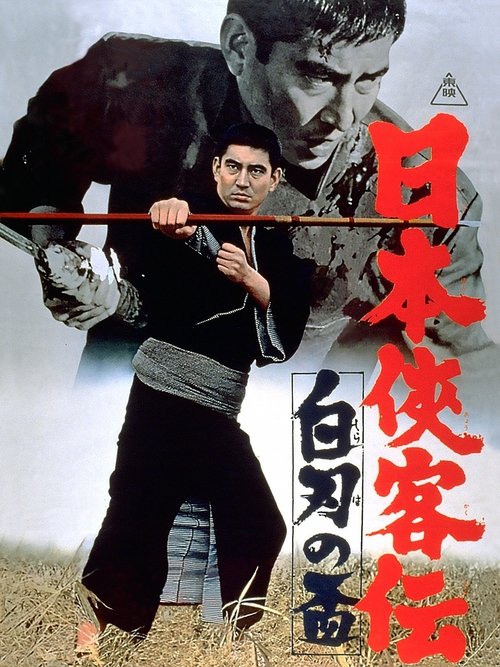
The Domain: White Blade
Plot
The Domain: White Blade
Get the Weekly Woke Watchlist
New and trending movies scored for woke bias, preachy messaging, and forced political themes — before you waste your evening.
No spam. One useful email per week.
Overall Series Review
Categorical Breakdown
The film is Japanese and is not concerned with American-style identity politics, race-swapping, or the vilification of whiteness. Character merit and conflict are entirely based on a man's adherence to the rigid yakuza code of honor and loyalty, which functions as a meritocratic standard within its own universe.
The film is set in a Japanese cultural context and does not engage in hostility toward Western civilization. It operates entirely within its own world, focusing on the internal moral struggles of a traditional Japanese subculture. The core themes of loyalty and honor show respect for an ancestral, if criminal, code.
The yakuza genre is fundamentally a hyper-masculine narrative. The plot centers on male action, male sacrifice, and the male code of *giri* (duty). Female characters are present, but their roles are typically supportive—as love interests, mothers, or geishas—and do not feature 'Mary Sue' or 'Girl Boss' tropes. The focus is on a protective masculinity and traditional complementarian roles, though within a violent setting. The score is marginally higher than 1 only due to the secondary and often tragic nature of female roles in the genre.
The narrative adheres to a normative structure, centering on traditional male and female dynamics for dramatic and romantic purposes. The hyper-masculine world of the yakuza genre does not include a focus on gender ideology or the centering of alternative sexualities. Sexuality is not a theme for political or social lecturing.
The narrative's moral core is built upon an ancient, albeit strict and criminal, code of honor, duty, and vengeance. This traditional, transcendent morality is the central conflict. The film shows no hostility toward religion and operates within a cultural framework that respects traditional spiritual or moral law, without any focus on Christianity as a root of evil.
Get the Weekly Woke Watchlist
New and trending movies scored for woke bias, preachy messaging, and forced political themes — before you waste your evening.
No spam. One useful email per week.