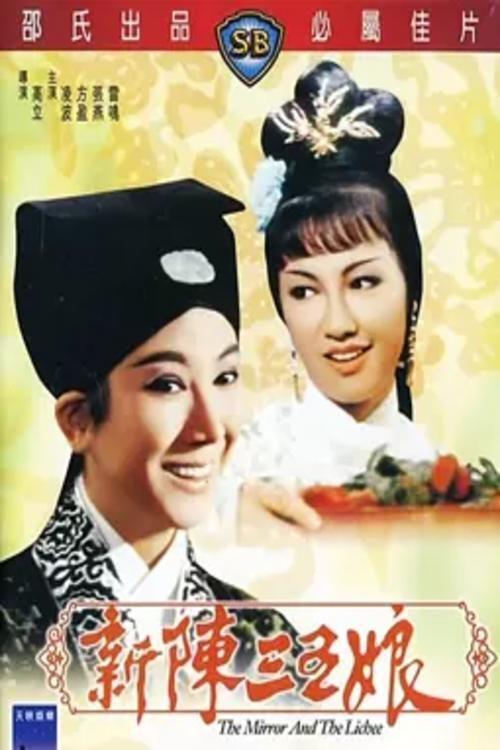
The Mirror and the Lichee
Plot
Movie queen Ivy Ling Po is ideally cast as a male scholar in this historical Huangmei Opera romance. It’s a tragic love story between the scholar and a local beauty (played by Fang Ying). He polishes mirrors as a pretext to get closer to his love, who signals her approval by tossing him a bunch of lichees. From that point on the course of true love proves operatically rocky, complete with murder and suicide.
Get the Weekly Woke Watchlist
New and trending movies scored for woke bias, preachy messaging, and forced political themes — before you waste your evening.
No spam. One useful email per week.
Overall Series Review
Categorical Breakdown
The film is a classic Chinese historical romance opera with no Western characters, eliminating the potential for vilification of whiteness or forced diversity. The focus is on romantic love and class-based conflict, not immutable characteristics or intersectional hierarchy.
The central tragic conflict arises from the 'law of the father' reneging on an arranged marriage, critiquing a specific patriarchal institution within traditional Confucian society. This is an internal, traditional criticism of societal rigidity, not a broad demonization of the home culture or its ancestors.
The film centers on the traditional *jiaren* (gifted beauty) and *caizi* (gifted scholar) romance, valuing the love match and fidelity. The female lead is not a career-focused 'Girl Boss,' and the narrative is a classic tragedy of love, not a lecture on anti-natalism or emasculation.
The story's core narrative is a normative traditional male-female pairing. The score is elevated because the film is famous for *fanchuan* (cross-sex acting), where the male lead is played by an actress, Ivy Ling Po, a convention noted by scholars as capitalizing on 'gender malleability' and inviting 'speculations... of queer kind' at an extra-narrative level. This non-normative performance is a key part of the movie's form.
The film operates within a traditional Chinese moral and social framework, focusing on Confucian-era family structures and values. There is no evidence of hostility toward religion or the promotion of moral relativism; the tragedy is rooted in an objective failure to uphold a traditional social contract.
Get the Weekly Woke Watchlist
New and trending movies scored for woke bias, preachy messaging, and forced political themes — before you waste your evening.
No spam. One useful email per week.