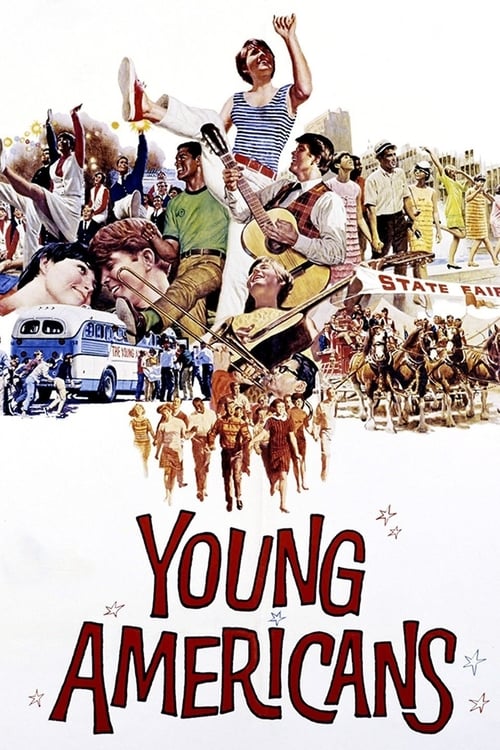
Young Americans
Plot
A 1967 pseudo-documentary film chronicling the travel experiences of The Young Americans choir. It was given an Academy Award in 1969, though it was revoked because it was released in 1967 and was thus ineligible, the only film in history to have done so.
Get the Weekly Woke Watchlist
New and trending movies scored for woke bias, preachy messaging, and forced political themes — before you waste your evening.
No spam. One useful email per week.
Overall Series Review
Categorical Breakdown
Characters are selected based on universal merit, specifically their vocal and performing talent, and a commitment to a clean-cut image. The film promotes a universal, shared American identity and wholesome values, entirely devoid of lectures on privilege, systemic oppression, or intersectional hierarchy.
The film explicitly 'embodies patriotism and wholesome entertainment,' presenting an 'uplifting vision of an America' during a tumultuous time. The narrative is a clear-cut celebration of American values, institutions, and cultural heritage, with the choir performing classic American standards like 'Yankee Doodle.'
Gender roles are presented in a balanced, traditional, and complementary manner, with the choir selecting an equal number of male and female performers. The image is one of 'wholesome entertainment,' with no signs of 'Girl Boss' tropes, emasculation of males, or messaging that promotes anti-natalism or rejects motherhood.
The documentary’s central focus is on a chaperoned, G-rated cross-country tour emphasizing clean-cut, traditional behavior. There is no presence of alternative sexual ideology, centering of non-normative sexualities, or deconstruction of the nuclear family unit; the structure is entirely normative for the period.
The film’s tone is overwhelmingly 'wholesome' and 'uplifting,' which serves to promote self-confidence, goodwill, and a framework of objective moral clarity. There is no hostility toward traditional religion and the overall structure acknowledges a higher moral law through its promotion of goodness and traditional virtues.
Get the Weekly Woke Watchlist
New and trending movies scored for woke bias, preachy messaging, and forced political themes — before you waste your evening.
No spam. One useful email per week.