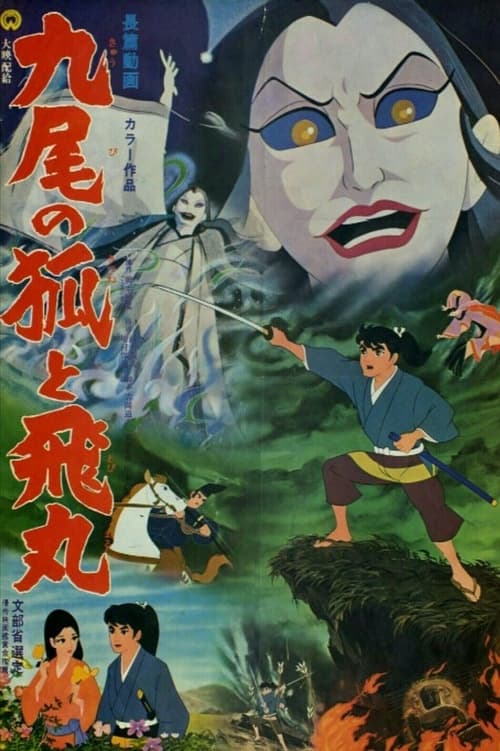
The Fox With Nine Tails
Plot
Tobimaru is the young emperor of Japan. He meets a mysterious woman named Tomamo. After successfully seducing Tobimaru, she brings great misfortune onto the land. Tobimaru soon discovers that Tomamo is actually a kitsune, and now has the task to unmask and kill her to save his land. (currently a lost media)
Get the Weekly Woke Watchlist
New and trending movies scored for woke bias, preachy messaging, and forced political themes — before you waste your evening.
No spam. One useful email per week.
Overall Series Review
Categorical Breakdown
The film is a Japanese production based on Japanese folklore, featuring a conflict entirely between Japanese characters and a traditional Japanese monster. The entire cast is racially authentic to its setting and time period. The conflict is based on a fight between a legitimate sovereign (the Emperor) and a demonic spiritual entity that has infiltrated the court, reflecting a universal moral struggle rather than an intersectional hierarchy.
The plot centers on the Emperor's fight to save and restore his land and people from a supernatural blight brought by the evil fox spirit, making it a story of national self-defense and preservation. The entire narrative is an affirmation of the traditional Japanese imperial institution and the integrity of the nation against a destructive external/spiritual force. There is no element of hostility toward the nation, ancestors, or home culture.
The core of the plot is a cautionary tale where an extremely powerful, beautiful, and intelligent female figure (Tomamo, the kitsune) is the primary antagonist whose seductive power causes the nation's downfall. Her intelligence and power are framed as destructive manipulation and a blight on the patriarchy, which runs counter to the 'Girl Boss' celebration. The plot is a moralistic warning against the danger of a woman who operates outside of established domestic boundaries. The Emperor's masculinity is protective and necessary for the restoration of order.
The narrative focuses solely on a highly traditional, though deceptive, male-female dynamic (Emperor and Courtesan) as the source of the conflict. The story is an archetypal tale of an attack on the stability of the imperial institution and the state's traditional structure. There is no presence of alternative sexualities, deconstruction of the nuclear family, or discussion of gender ideology.
The plot is a supernatural fantasy where a spiritual evil (the kitsune/demon) is battled and defeated by representatives of the moral/political order, often involving spiritual practitioners like a court diviner or astrologer. The story explicitly requires objective spiritual truth—that the creature is a real demon and not just a woman—and relies on spiritual authority to save the land. This is an affirmation of a transcendent moral and spiritual law.
Get the Weekly Woke Watchlist
New and trending movies scored for woke bias, preachy messaging, and forced political themes — before you waste your evening.
No spam. One useful email per week.