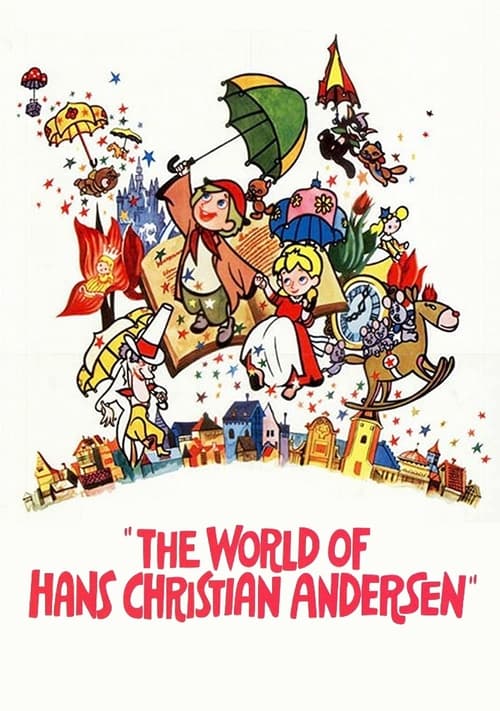
The World of Hans Christian Andersen
Plot
During his boyhood, young Hans Christian Andersen is exposed to the musical fairy-tale dream world by his Uncle Ole.
Get the Weekly Woke Watchlist
New and trending movies scored for woke bias, preachy messaging, and forced political themes — before you waste your evening.
No spam. One useful email per week.
Overall Series Review
Categorical Breakdown
The film focuses on the biographical journey of a specific historical individual, Hans Christian Andersen, celebrating his talent and imagination. Character success is based entirely on personal merit and artistic vision. The narrative features no discussions of privilege, systemic oppression, or any form of intersectional hierarchy. Casting is historically and culturally appropriate for the 19th-century Danish setting.
The film functions as a tribute to the Western/Danish literary tradition by celebrating Hans Christian Andersen and his works. The entire purpose of the film is to celebrate the culture and imagination of the 'home' civilization that produced these enduring fairy tales. Core Western institutions and ancestors are presented positively as the foundation for artistic genius, demonstrating gratitude and respect for the past.
The gender dynamics are traditional and reflective of the source material's era. Female characters like the Match Girl and the protagonist of 'The Red Shoes' are central to their respective moral parables, but neither embodies the 'Girl Boss' or 'Mary Sue' trope. They are characters whose narratives are often cautionary or tragic, focusing on piety, misfortune, or moral vanity. The story's focus on the male protagonist's creative journey maintains a traditional complementary gender structure.
As a 1968 children's animated fantasy, the film adheres strictly to a normative structure. The plot and embedded fairy tales contain no presence of non-traditional sexual ideology, queer theory, or gender deconstruction. The film presents the nuclear family and traditional male-female pairings as the unquestioned standard, treating sexuality as a private matter not for public or ideological instruction.
The themes within the adapted fairy tales, such as 'The Little Match Girl' finding solace with her deceased grandmother in heaven, strongly rely on transcendent morality and a spiritual framework. The film avoids moral relativism, presenting clear values of good and evil. The narrative implies a higher moral law, aligning closely with traditional faith-based virtues like piety, compassion, and the triumph of good.
Get the Weekly Woke Watchlist
New and trending movies scored for woke bias, preachy messaging, and forced political themes — before you waste your evening.
No spam. One useful email per week.