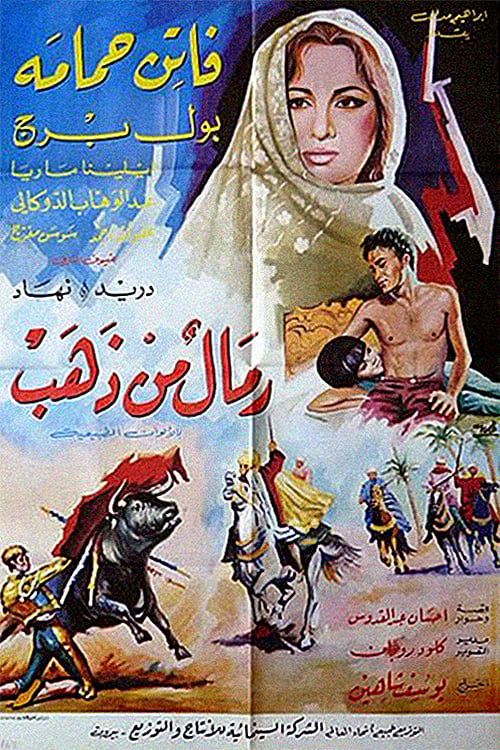
Sands of Gold
Plot
Tarek loves his cousin Zubaida and travels to Spain to work in bullfighting under a pseudonym. Zubaida comes to Spain in search of her lover, but despite his pleas for her to return to Morocco, she continues to follow him.
Get the Weekly Woke Watchlist
New and trending movies scored for woke bias, preachy messaging, and forced political themes — before you waste your evening.
No spam. One useful email per week.
Overall Series Review
Categorical Breakdown
Characters are judged by personal ambition (Tarek's bullfighting) and romantic devotion (Zubaida's pursuit), not by race or immutable characteristics. The narrative centers on a cultural conflict (Morocco vs. Spain) without any suggestion of intersectional hierarchy or vilification of 'whiteness'. The focus remains on individual merit and traditional motivations.
The plot contains a tension between one's 'home' culture (Morocco) and a foreign Western culture (Spain). Tarek's ambition leads him to prefer the external culture for his career, which introduces a mild element of cultural dissatisfaction. This is a simple clash of traditions versus personal desire and does not frame Western civilization as fundamentally corrupt or racist.
Zubaida demonstrates strong personal agency by actively pursuing Tarek and defying his demand that she return to Morocco, showing a high degree of independence for the time. However, her motivation is love and marriage, not anti-natal careerism or an attempt to emasculate the male lead. The dynamic is one of a traditional romantic pursuit with a determined female partner.
The core plot is strictly defined by the traditional male-female pairing of Tarek and Zubaida, who are cousins in love. The entire dramatic structure is built upon this normative romantic relationship, with no indication of alternative sexualities, deconstruction of the nuclear family, or gender ideology.
The story is a simple romantic drama focused on ambition, family, and bullfighting. There is no evidence of hostility toward religion, moral relativism, or the depiction of religious characters as villains or bigots. Transcendent morality and cultural faith are simply part of the background context for the two cultures being contrasted.
Get the Weekly Woke Watchlist
New and trending movies scored for woke bias, preachy messaging, and forced political themes — before you waste your evening.
No spam. One useful email per week.