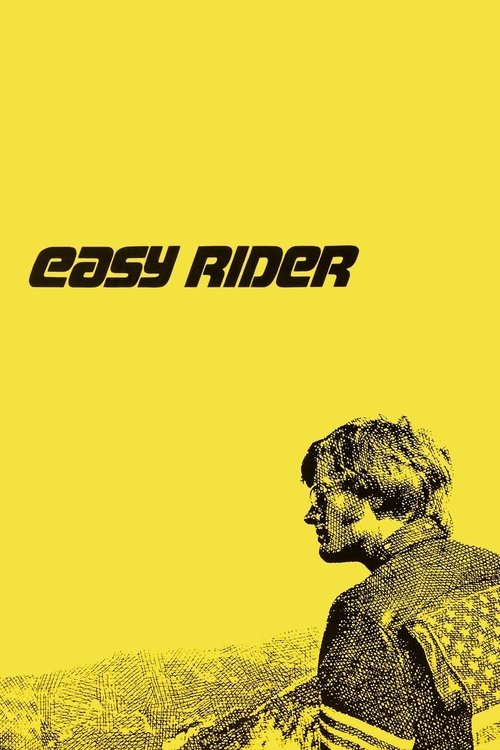
Easy Rider
Plot
Wyatt and Billy, two Harley-riding hippies, complete a drug deal in Southern California and decide to travel cross-country in search of spiritual truth.
Get the Weekly Woke Watchlist
New and trending movies scored for woke bias, preachy messaging, and forced political themes — before you waste your evening.
No spam. One useful email per week.
Overall Series Review
Categorical Breakdown
The narrative's central conflict is a culture war focused almost entirely on class, generation, and lifestyle rather than race or intersectional identity. The protagonists and their antagonists are nearly all white, and their friction stems from long hair and anti-establishment ideology clashing with traditional society. Characters are not judged by immutable characteristics or systemic oppression based on race, but by their participation in either the 'square' or 'counterculture' subculture. The film is a product of its time and does not engage with modern identity politics or race-based vilification of 'whiteness.'
The film functions as a sweeping critique of postwar American society and the 'Establishment,' framing it as a 'brutal' and 'sterile' culture that responds to non-conformity with visceral hostility and violence. The two protagonists are 'anti-heroes' who reject the 'faux American dream' and its accompanying materialism, seeking 'freedom' elsewhere. The message is one of civilizational disillusionment, where the home culture is fundamentally corrupt and violently oppressive to those who seek a higher spiritual truth. The narrative positions the road and the drug-fueled counterculture as the desirable alternative to a flawed nation.
The main focus is entirely on the male protagonists and their male-centric journey. Female characters exist in minor, secondary roles as part of the 'free love' counterculture or as a brief encounter at a brothel. There are no 'Mary Sue' or 'Girl Boss' tropes present. The emphasis on 'free love' and the communal lifestyle implicitly supports an anti-traditional-family and anti-natalist message, as the characters reject conventional relationships for a transient, hedonistic existence. However, the female characters are not perfect or politically centered, resulting in a moderate score.
The film contains no centering of alternative sexualities, gender ideology, or deconstruction of the nuclear family through a modern queer theory lens. Sexual freedom is present in the form of 'free love' and a visit to a brothel, which is a component of the broader 'sexual revolution' of the 1960s, but it remains within a normative male-female pairing context. Sexuality is presented as a private matter or a component of the subculture's hedonism, without political lecturing on gender or identity.
The core of the protagonists' quest is a search for 'spiritual truth' that explicitly rejects the traditional, institutionalized Christian faith of the American South. The film's major set piece—an LSD trip in a New Orleans cemetery—juxtaposes the protagonists' drug-fueled, subjective spiritual experience with Catholic sacred imagery and a funeral rite, suggesting an abandonment of transcendent morality for subjective, drug-induced 'revelation.' Traditional Christian faith, embodied by the 'squares,' is presented as part of the repressive, violent establishment that murders the heroes, making it the root of the 'evil' that destroys freedom.
Get the Weekly Woke Watchlist
New and trending movies scored for woke bias, preachy messaging, and forced political themes — before you waste your evening.
No spam. One useful email per week.