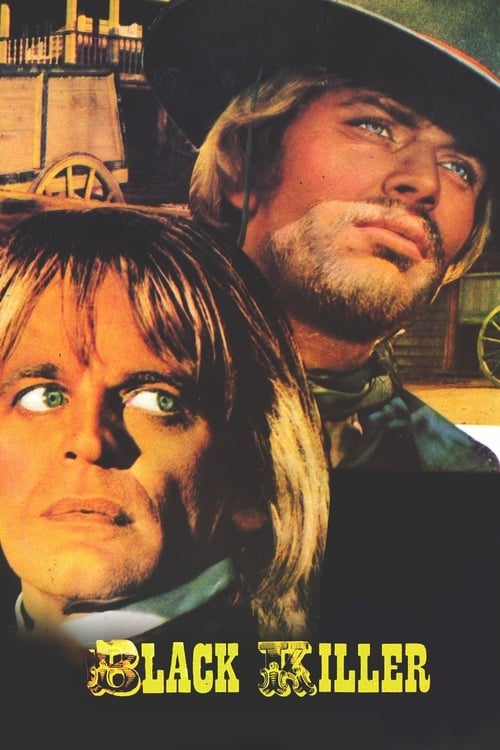
Black Killer
Plot
The town of Tombstone is overrun by Ramon, Pedro, Miguel, Ryan and Slide -- five outlaw brothers who are taken on by gunslinger Burt Collins and a deadly lawyer.
Get the Weekly Woke Watchlist
New and trending movies scored for woke bias, preachy messaging, and forced political themes — before you waste your evening.
No spam. One useful email per week.
Overall Series Review
Categorical Breakdown
The narrative centers on a classic Western conflict of outlaws versus men seeking private vengeance and financial gain, not systemic oppression. The villains are the O'Hara brothers, an ambiguously-ethnic crime family, and the protagonist is a white gunslinger. A Native American character is a victim of violence and a partner in revenge, but the portrayal relies on offensive period-typical stereotypes and inauthentic casting, which is a form of exploitation rather than a critique of whiteness or a lecture on intersectionality.
The institutions of the Western town, such as the Judge and the law, are depicted as completely corrupt and complicit with the outlaws. This cynicism toward established authority is a trademark of the Spaghetti Western genre. The goal of the protagonists is not to deconstruct Western civilization but to violently restore a brutal form of justice and/or acquire stolen property.
The main female character's role is defined by being a victim of sexual violence and the death of her husband, which serves as motivation for the male protagonist's vengeance. She later acts as a capable partner in the revenge plot, using a traditional skill (bow and arrow). She is not presented as a 'Mary Sue' or 'Girl Boss,' and the narrative contains no anti-natalist messaging or overt emasculation of men.
The movie contains no themes or characters related to alternative sexualities, sexual ideology, or gender theory. The core family unit whose destruction drives the plot is a traditional male-female pairing. The narrative adheres to a normative structure without political commentary.
The movie's morality is highly cynical, transactional, and secular, focusing on personal greed and vengeance, common to the genre. The plot does not feature a religious institution or Christian characters being specifically vilified or framed as the root of evil. Morality is subjective based on survival and self-interest, but this is a spiritual vacuum rather than active anti-Theist messaging.
Get the Weekly Woke Watchlist
New and trending movies scored for woke bias, preachy messaging, and forced political themes — before you waste your evening.
No spam. One useful email per week.