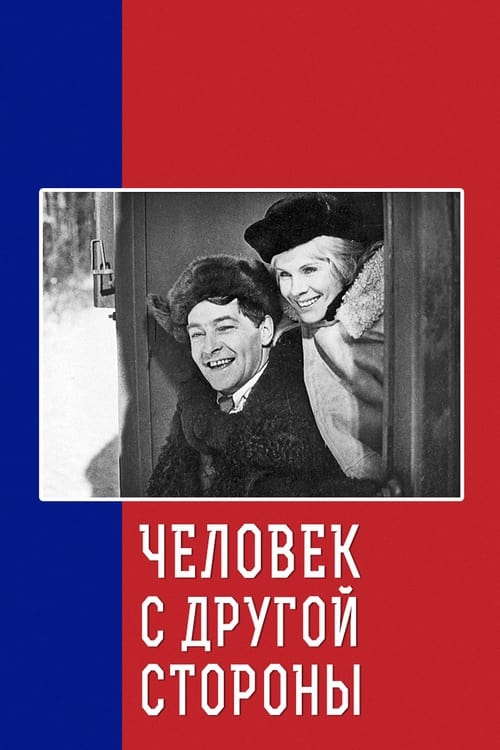
The Man from the Other Side
Plot
After the Bolshevik seizure of power in 1917. A Russian engineer gets the assignment to purchase locomotives from Sweden. Paid in gold. Claimed by the opponents of the revolution.
Get the Weekly Woke Watchlist
New and trending movies scored for woke bias, preachy messaging, and forced political themes — before you waste your evening.
No spam. One useful email per week.
Overall Series Review
Categorical Breakdown
The narrative's central conflict revolves around political and financial stakes following the Bolshevik Revolution, not race or intersectional hierarchy. Casting is historically authentic to the Russian and Swedish setting of the early 20th century, focusing on character roles without any forced diversity or vilification of 'whiteness.'
The score reflects a potential, but not guaranteed, sympathy toward the revolutionary Bolshevik regime, which is an ideology fundamentally hostile to traditional Western civilization and its institutions. However, the conflict includes 'opponents of the revolution,' indicating the tension is political-historical, not a broad civilizational self-hatred of the West. It critiques an ideology of the West's primary geopolitical rival at the time (Communism), not the West itself.
The film's focus is on a geopolitical mission, and the Swedish female lead, Britt Stagnelius, functions within the context of a 1972 European drama. There is no evidence of the modern 'Girl Boss' trope, male emasculation, or explicit anti-natalist messaging. Gender roles are portrayed as typical for a 1972 historical drama, not as a political lecture.
As a 1972 historical drama about Russian and Swedish political intrigue, the film does not center alternative sexualities, deconstruct the nuclear family as a political ideology, or engage with gender theory. The structure is entirely normative to the historical and geographic setting.
The plot centers on a financial/political mission. While the Soviet regime was officially atheist, the film does not use the narrative to actively vilify traditional religion, specifically Christianity, or promote moral relativism. The moral and ideological framework is determined by political loyalty to the revolutionary cause versus its opponents, not a direct attack on faith.
Get the Weekly Woke Watchlist
New and trending movies scored for woke bias, preachy messaging, and forced political themes — before you waste your evening.
No spam. One useful email per week.