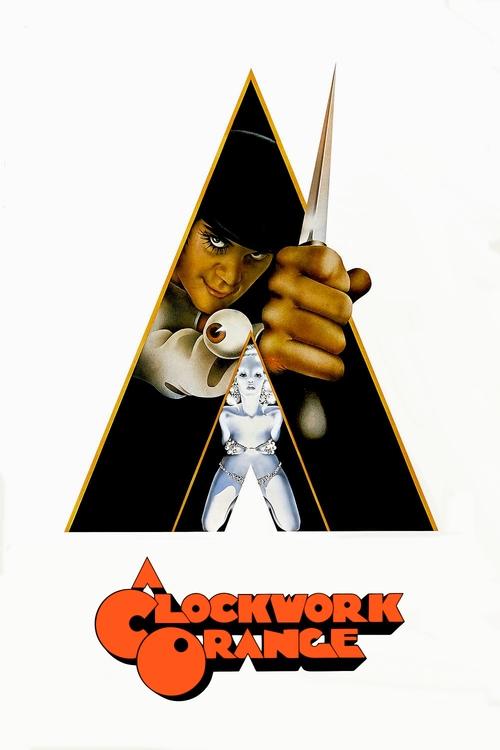
A Clockwork Orange
Plot
In a near-future Britain, young Alexander DeLarge and his pals get their kicks beating and raping anyone they please. When not destroying the lives of others, Alex swoons to the music of Beethoven. The state, eager to crack down on juvenile crime, gives an incarcerated Alex the option to undergo an invasive procedure that'll rob him of all personal agency. In a time when conscience is a commodity, can Alex change his tune?
Get the Weekly Woke Watchlist
New and trending movies scored for woke bias, preachy messaging, and forced political themes — before you waste your evening.
No spam. One useful email per week.
Overall Series Review
Categorical Breakdown
The narrative's central conflict revolves around philosophical concepts of free will and state control, with character standing determined by their moral choice or lack thereof, not by race or intersectional status. The core issues are social, class-based, and generational rather than relying on immutable characteristics to assign victim or oppressor status.
The setting is a profoundly dysfunctional, corrupt, and decaying near-future Britain where the government, police, and even domestic life are hostile, apathetic, or totalitarian. The film’s relentless depiction of the home culture as a sterile, lawless, and brutalized dystopia represents a severe vilification of Western institutions in decline.
The movie contains scenes of graphic sexual violence and portrays women largely as victims or as highly sexualized, non-agentic figures. While this depiction is misogynistic and repulsive, it does not include modern 'Girl Boss' or 'Mary Sue' tropes. The critique focuses on toxic masculinity and the breakdown of society, not the emasculation of non-toxic men to elevate female characters.
Alternative sexualities are not centered or used to deconstruct the nuclear family as a political project. The sexuality presented is largely aggressive and heteronormative or implied in the male-centric prison, but there is no contemporary gender ideology or lecturing on queer theory present in the film's philosophical or thematic material.
The film explicitly uses the Christian concept of moral choice and Original Sin to frame its central debate. The prison chaplain is one of the few characters to articulate a clear moral argument against the dehumanizing state-sponsored treatment, viewing forced goodness as worse than chosen evil. Traditional religion is thus a voice of transcendental resistance, not a source of evil or bigotry.
Get the Weekly Woke Watchlist
New and trending movies scored for woke bias, preachy messaging, and forced political themes — before you waste your evening.
No spam. One useful email per week.