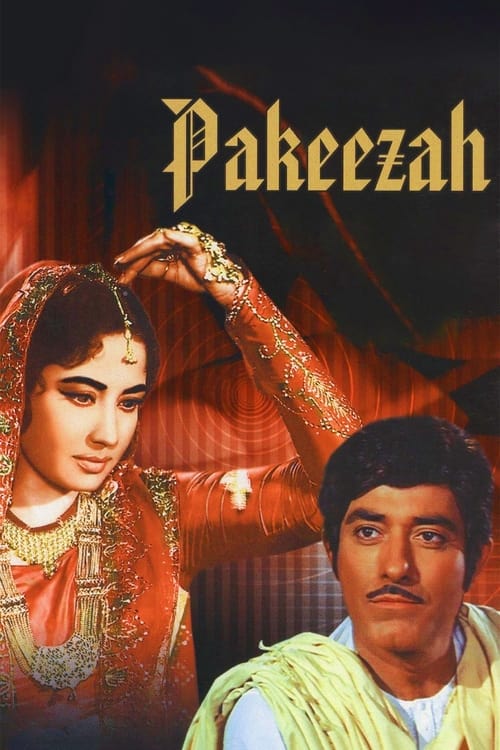
Pakeezah
Plot
A beautiful courtesan is unable to break away from the cycle of prostitution until a forest ranger falls in love with her. Unfortunately, his wealthy parents oppose the union.
Get the Weekly Woke Watchlist
New and trending movies scored for woke bias, preachy messaging, and forced political themes — before you waste your evening.
No spam. One useful email per week.
Overall Series Review
Categorical Breakdown
The plot's central conflict revolves around the oppression of the protagonist due to her inherited social status as a courtesan. This is a critique of systemic social stigma and class-based discrimination. However, the film's core theme is that her lover sees her 'pure heart' (Pakeezah), affirming that individual, universal merit and character transcend her social designation, which is the definition of a low score. The casting is culturally authentic to the setting, focusing on Indian/Muslim characters without any forced diversity or anti-whiteness narratives.
The film meticulously replicates and romanticizes the opulence, language (Urdu), and high arts (Kathak, ghazals) of the ancestral culture of the Nawabs in Lucknow. The film critiques the *hypocrisy* and *rigid orthodoxy* within that culture that rejects the courtesan, not the civilization itself. The narrative celebrates the aesthetic and cultural heritage while targeting a moral flaw within its social structure. It shows gratitude for the high culture preserved by the tawaifs themselves.
The female lead is the powerful center of the story and a highly skilled artist, but her driving motivation is the deep desire for traditional 'respectability' and a loving marriage, which is her ultimate fulfillment. She explicitly views her independent professional life as a source of shame and a 'debased status' she must flee. The goal of the heroine is complementarian and anti-natalism is entirely absent. The male leads are depicted as either noble (Salim) or weak against an oppressive patriarch (Shahabuddin), not as universally toxic or bumbling idiots.
The narrative is a classic heterosexual romance. The central conflict is built on the social barriers preventing a traditional male-female marriage. The traditional nuclear family structure, which Sahibjaan yearns to join, is the normative structure of the film. There is no presence of alternative sexualities being centered, nor is there any deconstruction of the nuclear family or lecturing on gender theory.
The narrative's oppressive force is the strict, rigid, and hypocritical application of social/religious orthodoxy by a wealthy patriarch, not faith itself. The film is a 'Muslim social' and the ultimate resolution is a religiously sanctioned marriage between cousins. The lover's act of naming the protagonist 'Pakeezah' (Pure Heart) and his unwavering acceptance of her purity suggests an objective, transcendent moral truth (her inner soul) that exists beyond social prejudice.
Get the Weekly Woke Watchlist
New and trending movies scored for woke bias, preachy messaging, and forced political themes — before you waste your evening.
No spam. One useful email per week.