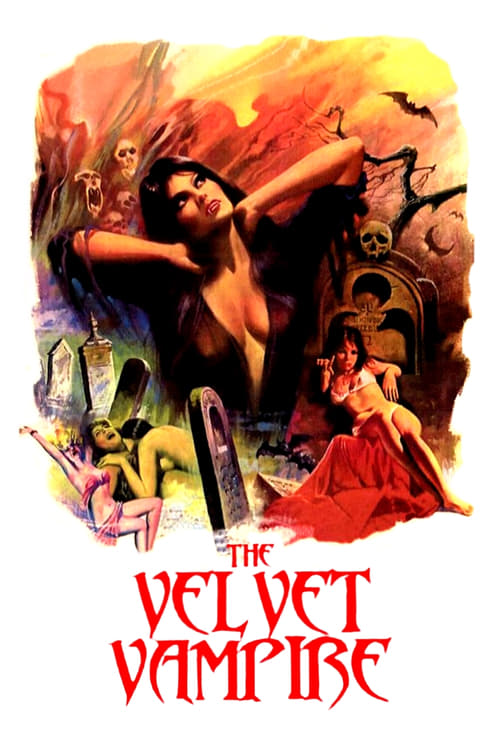
The Velvet Vampire
Plot
A married couple accept the invitation of mysterious vixen Diane LeFanu to visit her in her secluded desert estate. Tensions arise when the couple, unaware at first that Diane is a centuries-old vampire, realize that they are both objects of the pale temptress' seductions.
Get the Weekly Woke Watchlist
New and trending movies scored for woke bias, preachy messaging, and forced political themes — before you waste your evening.
No spam. One useful email per week.
Overall Series Review
Categorical Breakdown
Character merit is overshadowed by the depiction of a white male as a weak and easily corrupted figure who is seduced and eliminated early in the conflict. The main characters are white, and the narrative does not rely on an intersectional hierarchy of immutable characteristics. There is a single Native-American supporting character in a trope-like role as the vampire's manservant, but the primary conflict is not racial.
The traditional institution of the American nuclear family and heterosexual marriage is fundamentally framed as unsatisfying, restrictive, and ripe for corruption. The married couple's bond is shown to be so weak that the husband instantly betrays his wife, and the wife considers the vampire’s predatory advances as a means to get back at him. The central goal of the antagonist is to destroy the marital union, deconstructing the concept of the family as a stable, protective institution.
The movie is explicitly a feminist satire, intentionally subverting the female-as-victim trope by making the vampire a powerful, modern woman who holds all the sexual power. The male character is depicted as a 'bumbling idiot' and 'asshole' who is emasculated by his quick submission and subsequent demise. The ultimate confrontation and victory is achieved by the female protagonist over the female antagonist, inverting the need for a male savior.
Alternative sexuality is a central and driving force of the plot, as the vampire is sexually fluid and attempts to form a predatory ménage à trois, targeting both the husband and wife. The narrative centers on this deconstruction of the nuclear family. The climax has been interpreted as an indictment of conventional morality as a group of people use religious symbols to 'demonize' the bisexual woman.
The film’s central conflict is between the amoral, 'free love' philosophy of the vampire and the constraints of traditional morality. However, the vampire, representing moral relativism and transgression, is ultimately defeated by the protagonist using Christian symbols (crosses) and a group of 'Christian hippie allies.' This use of traditional religious tools for a righteous end prevents a high score, but the ending's interpretation as an 'indictment' of the religious mob keeps the score in the neutral-to-moderate range.
Get the Weekly Woke Watchlist
New and trending movies scored for woke bias, preachy messaging, and forced political themes — before you waste your evening.
No spam. One useful email per week.