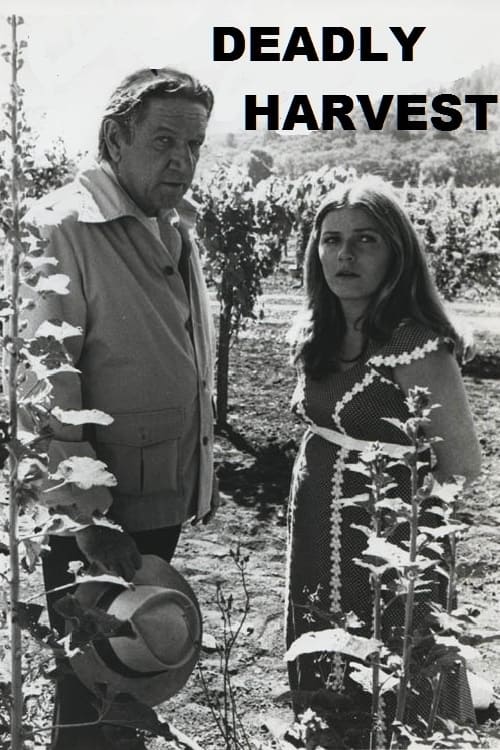
Deadly Harvest
Plot
An Iron Curtain defector who has been living for years as a California winegrower learns that Soviet agents are stalking him.
Get the Weekly Woke Watchlist
New and trending movies scored for woke bias, preachy messaging, and forced political themes — before you waste your evening.
No spam. One useful email per week.
Overall Series Review
Categorical Breakdown
The main character, Anton Solca, is defined entirely by his choice to defect and his skill as a winegrower, a measure of character merit and professional reinvention. The conflict is a classic Cold War battle of ideologies—Western freedom versus Soviet oppression—which entirely bypasses race, immutable characteristics, or intersectional hierarchy. The casting is colorblind for the era, and the narrative contains no vilification of 'whiteness' or forced diversity, focusing instead on political allegiance.
The plot is anti-Oikophobic by design, as the protagonist is an Iron Curtain defector who fled his former, corrupt regime for the safety and opportunity of life as a California winegrower. The narrative frames American life and the protagonist's chosen home as a valuable sanctuary worth fighting for. The villains are foreign agents from a hostile, opposing political system (the Soviets). The film operates on a principle of Gratitude and Chesterton’s Fence for the Western world and its institutions by portraying its contrast to the totalitarian alternative.
Patty Duke's character, Jenny, is a local songwriter who allies herself with Solca during his crisis. As a 1972 TV thriller, the primary heroic role is held by the male defector. Jenny's function is to assist the male lead, demonstrating a complementary, supportive role rather than an anti-natalist or 'Girl Boss' dynamic. The film does not overtly lecture on gender roles or portray men as universally bumbling or toxic; masculinity is protective and competent in the face of danger.
The core narrative is a political espionage thriller set in 1972. The plot focuses exclusively on the pursuit of a defector by Soviet agents. There is no presence of sexual ideology, centering of alternative sexualities, deconstruction of the nuclear family, or discussion of gender theory. The structure is entirely normative and concerned with the immediate threat to the protagonist's heterosexual-normative life.
As a Cold War espionage story, the narrative is focused on political maneuvering and survival, not theological commentary. The film presents a fundamentally moral world where the Soviet agents are objectively malicious and the defector's fight for freedom is objectively righteous. There is no hostility toward religion and no spiritual vacuum; the conflict is moral-political, not moral-relativist.
Get the Weekly Woke Watchlist
New and trending movies scored for woke bias, preachy messaging, and forced political themes — before you waste your evening.
No spam. One useful email per week.