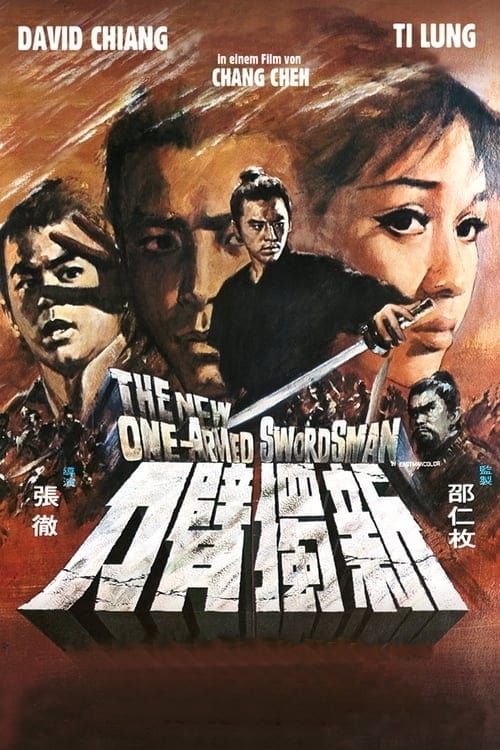
The New One-Armed Swordsman
Plot
Lei Li lost his right-arm in a sword duel with the master of a martial arts school, long ago. Now, he is able to defend himself well with just his left arm, and kung fu techniques. That he proves with just the help of his friend Chung-Chieng, when he crosses his path with a beautiful girl in need, Pao Chiao. Even against impossible odds, he will prove a great warrior.
Get the Weekly Woke Watchlist
New and trending movies scored for woke bias, preachy messaging, and forced political themes — before you waste your evening.
No spam. One useful email per week.
Overall Series Review
Categorical Breakdown
Universal Meritocracy drives the plot. The hero, Lei Li, is judged and ultimately succeeds based on his singular skill, honor, and courage, not on immutable characteristics or group identity. The casting is culturally authentic and the conflict is focused on an individual battle against a corrupt villain, not systemic oppression.
The movie is a celebration of the traditional values of the Wuxia world, emphasizing honor, righteous combat, and the sacred bond of brotherhood. The hero fights to restore justice to his martial community, viewing its institutions as inherently virtuous when not corrupted by individual evil. The story respects the code of its heritage.
The gender dynamics are complementary. The narrative centers on a journey of male self-restoration and protective masculinity. The primary female character is a love interest who serves as a compassionate source of kindness for the hero in his disgrace and a damsel who needs protection, motivating the hero's return to action.
The primary narrative structure is normative, featuring a central heterosexual love interest for the hero. However, the film is known for its intense and emotionally centered male bond between the two lead swordsmen, Lei Li and Fung, with a strong, noted homoerotic subtext that sometimes overshadows the traditional romance.
The moral framework is governed by a transcendent moral law rooted in the Wuxia code of honor, justice, and chivalry. The story hinges on the hero's adherence to a personal vow and his eventual decision to honor a higher moral imperative (vengeance for a fallen friend). Traditional religion is not featured, nor is there any critique of faith or embrace of moral relativism.
Get the Weekly Woke Watchlist
New and trending movies scored for woke bias, preachy messaging, and forced political themes — before you waste your evening.
No spam. One useful email per week.