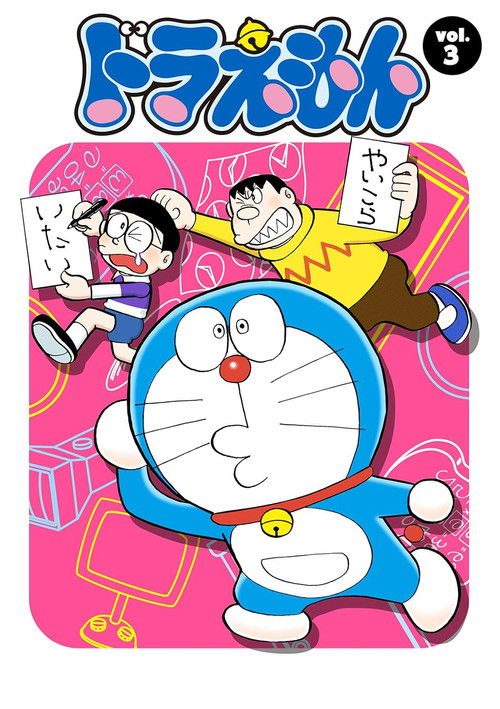
Doraemon
Season 3 Analysis
Season Overview
No specific overview for this season.
Season Review
Categorical Breakdown
The narrative is entirely race-blind, focusing exclusively on character merit, or lack thereof, such as Nobita's academic failure and moral weakness. All main characters are ethnically Japanese, and there is no vilification of a specific 'whiteness' or forced diversity. The drama revolves around universal childhood experiences of friendship, bullying, and failure.
The series promotes and exports Japanese culture as part of a national 'soft power' strategy, and the setting presents an idyllic, harmonious suburban Japanese life. The institutions of the family, school, and community are consistently upheld as the normative structure, with stories often involving trips to the past that respectfully depict Japanese ancestors. There is no trace of 'Civilizational Self-Hatred' or 'Noble Savage' tropes.
The score reflects a critique of traditional gender archetypes rather than a modern 'Girl Boss' ideology. The central male child, Nobita, is consistently incompetent and lazy, while his father is often depicted as weak and subordinate to his wife. Nobita's mother and the other friends' mothers are the dominant, powerful, and 'scary' figures in the home. The primary female child, Shizuka, is affectionate and competent, though her main trait is bathing. This dynamic emasculates the main male characters but does not follow the anti-natalism/career-only script, as the mothers are full-time housewives and the source of authority.
The core family structure is the traditional nuclear family (Nobita's mother is a housewife, his father is a salaryman). The series maintains a normative structure where sexuality is entirely absent and private, focusing only on pre-teen friendships and simple crushes. There is no centering of alternative sexualities, deconstruction of the nuclear family, or introduction of gender ideology, making it a baseline example of the normative structure.
Stories are explicitly constructed to promote 'moral reasoning and ethical decision-making' and 'ethical and moral values.' The moral lessons are absolute, with characters suffering negative consequences when they use Doraemon's gadgets to lie, cheat, or take shortcuts. While the narrative is not explicitly religious, it consistently acknowledges Objective Truth and a higher moral law concerning personal conduct. The science-fiction element does not negate moral structure but provides the means to test it.