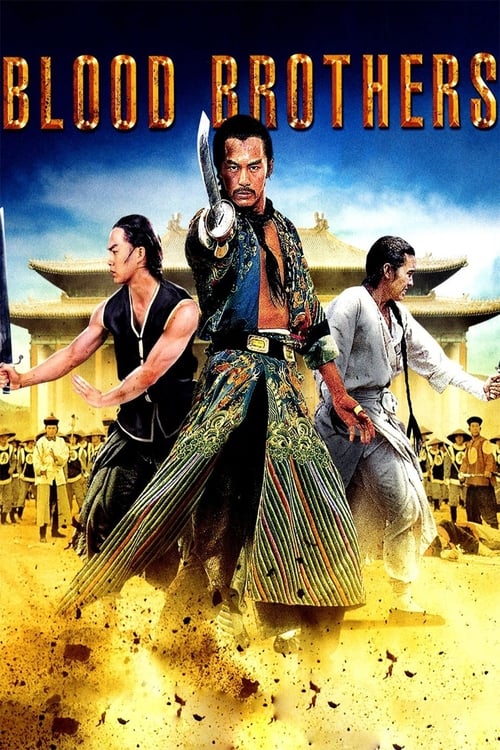
Blood Brothers
Plot
Set in the waning years of the Ching Dyansty, this dramatic, tragic, romantic, blood-soaked martial arts tale of betrayal and revenge explores one of the most sensational scandals in Chinese history and marked the true ascension of its director and actors to superstar status. In fact, Ti Lung won Taiwan's Golden Horse Award for Outstanding Performance as the challenging role of a jealous provincial governor who kills his friend in order to steal the man's wife.
Get the Weekly Woke Watchlist
New and trending movies scored for woke bias, preachy messaging, and forced political themes — before you waste your evening.
No spam. One useful email per week.
Overall Series Review
Categorical Breakdown
The film's central conflict revolves around ambition, betrayal, and a love triangle within an all-Chinese main cast set in the Qing Dynasty. Characters rise and fall based on personal merit, greed, and honor, not on race or intersectional hierarchy. The story contains no vilification of 'whiteness' or forced diversity, focusing on universal themes of human failure.
The narrative details a famous historical scandal and critiques the corruption and ambition of an individual official within the Imperial government. The tragic downfall stems from the failure of men to uphold their sacred oath, not from a critique of Chinese civilization as fundamentally corrupt or racist. The film maintains respect for codes of honor and the historical context of the setting.
The woman in the film, Mi Lan, serves as a catalyst for the male characters' ultimate tragedy, a traditional *femme fatale* archetype whose choice to engage in an affair breaks the blood brotherhood. The narrative centers on the honor and betrayal between the three men. The female character is not a flawless 'Girl Boss,' and the focus is on the devastating consequences of lust and broken marriage/oaths, not anti-natalism.
The core relational drama is a heterosexual love triangle, where the rising governor Ma Xin-yi steals his sworn brother's wife. The film adheres to the normative structure of brotherhood and marriage, which is violated to create the central tragedy. There is no presence of alternative sexualities being centered, deconstruction of the nuclear family as 'oppressive,' or promotion of gender ideology.
The core of the dramatic conflict is the violation of the sacred 'blood brother' oath and the subsequent need for retribution, which functions as a transcendent moral law based on honor. The film's conclusion is a moral reckoning. There is no hostility toward religion, especially Christianity, nor does the morality operate on subjective 'power dynamics' but rather on a rigid code of honor.
Get the Weekly Woke Watchlist
New and trending movies scored for woke bias, preachy messaging, and forced political themes — before you waste your evening.
No spam. One useful email per week.