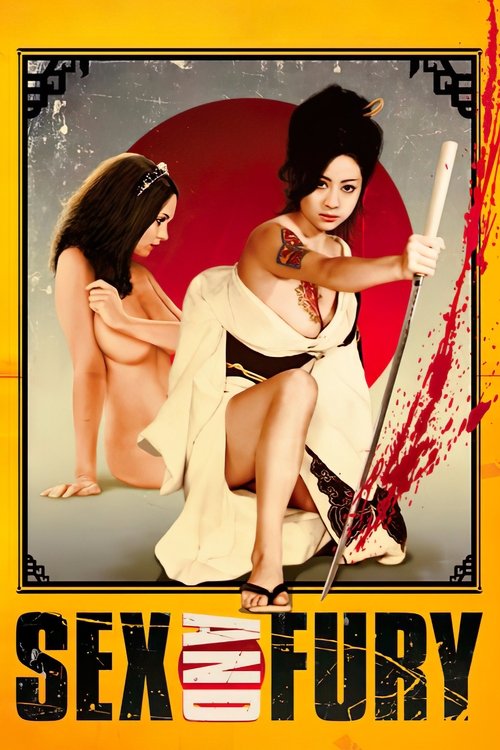
Sex and Fury
Plot
Sex & Fury chronicles Ocho's exploits as she searches for her father's killers, each identified by unique tattoos on their backs (a deer, a boar, and a butterfly). Along the way, she also crosses paths with Shonusuke, a radical set on murdering prominent politician Kurokawa and Christina, an American spy posing as a gambler.
Get the Weekly Woke Watchlist
New and trending movies scored for woke bias, preachy messaging, and forced political themes — before you waste your evening.
No spam. One useful email per week.
Overall Series Review
Categorical Breakdown
The plot centers on a foreign, Western (British) intelligence operation that attempts to destabilize Japan by instigating a 'second opium war' for profit. This frames the conflict along national and racial lines, where the 'whiteness' of the Western agents is depicted as an external, imperialist evil seeking to corrupt the Japanese nation. The central heroine's merit is her raw skill, but her main antagonists are defined by their foreign status and their destructive agenda against Japan.
The narrative does not exhibit hostility toward its own home culture, but rather contrasts the strength of the Japanese heroine against a powerful Western, foreign imperialist threat. Japanese society is shown to have internal corruption through the Yakuza, but the greatest evil is the plot by the British agent and his American spy recruit to exploit Japan for profit. The film depicts a respect for traditional Japanese strength and a rejection of Western colonialist aggression.
The protagonist Ocho is the ultimate 'Girl Boss' figure who is hyper-competent in all skills, including sword fighting, firearms, gambling, and seduction, using these talents solely for her personal mission of vengeance. She is a powerful, independent female figure whose primary obstacles are incompetent, predatory, or toxic males (Yakuza bosses, British agents) whom she systematically defeats. The film elevates female power and independence while portraying nearly all men as antagonists or bumbling figures.
The film focuses on sex and violence within the traditional power dynamics of its exploitation genre context, often with heterosexual undertones. The plot does not center on alternative sexualities, gender identity, or a deconstruction of the nuclear family structure. Sexual identity is used as a tool of power and exploitation in a classical male-female dynamic, not as a means to promote contemporary queer theory or gender ideology.
The plot is entirely secular, focused on criminal revenge, Yakuza power struggles, and international political intrigue. Traditional religion, specifically Christianity, is not a significant element of the narrative or theme. The action is driven by personal vengeance and greed, not a philosophical critique of objective moral truth or a spiritual system.
Get the Weekly Woke Watchlist
New and trending movies scored for woke bias, preachy messaging, and forced political themes — before you waste your evening.
No spam. One useful email per week.