Red Coat
Plot
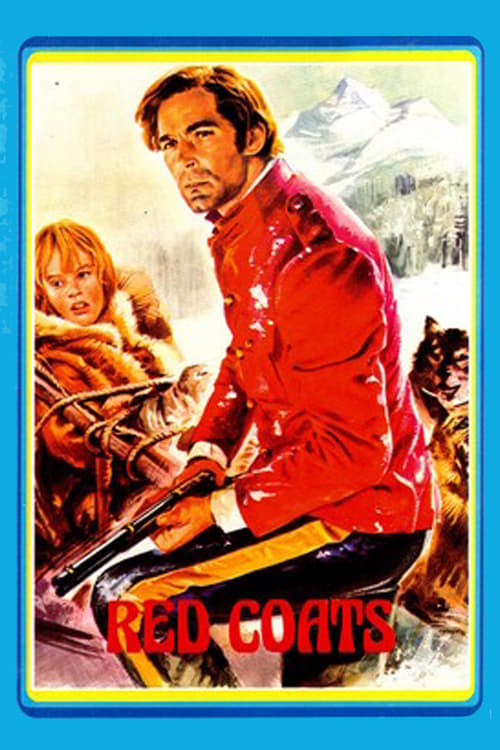
Cormack, the lawman most feared by the rugged pioneers at the turn of the century, has a mysterious bond with "Caribou," an outlaw whom he has jailed. When Caribou escapes from prison, he returns to seek revenge.
Get the Weekly Woke Watchlist
New and trending movies scored for woke bias, preachy messaging, and forced political themes — before you waste your evening.
No spam. One useful email per week.
Overall Series Review
Categorical Breakdown
The film focuses on a personal, blood-feud drama between two white males, Bill Cormack and Caribou. Character merit, driven by personal morality and choices, defines the narrative and the villain’s journey toward redemption. There is no explicit theme of systemic oppression or vilification of 'whiteness.' A rival gang is mentioned, and one line references 'the Algonquins are out on the war path,' which is a standard, non-intersectional-lens 'Indian threat' trope typical of older Westerns, not a modern critique.
The central protagonist, Bill Cormack, is a Royal Canadian Mounted Police officer, representing a core institution of Western law, order, and civilization in the rugged frontier. The narrative revolves around his steadfast duty to uphold the law and protect his family. The traditional Western archetype of the lawman is treated with gravity and respect, viewing law enforcement and family as necessary shields against chaos and individual moral failure.
The primary female character, Elizabeth, is a singer who chooses a life of stability, marrying the Mountie Cormack and embracing the role of a devoted wife and mother to their son, Jimmy. Her choice and the family unit she creates are celebrated as bringing 'a whole new happiness' to Cormack’s life. After she dies, the plot centers entirely on the male pursuit and protection of the child, reinforcing a traditional view of complementary gender roles and the vitality of the nuclear family.
The entire dramatic structure is built upon a heterosexual love triangle that leads to a traditional nuclear family structure. The moral and emotional stakes of the film are bound up in the relationship between husband, wife, and son. There is no inclusion of alternative sexualities, gender ideology, or deconstruction of the nuclear family unit. The film adheres to a completely normative structure.
Religion is not a central theme, and there is no overt hostility toward Christianity or traditional religion. One character, Caribou, swears a threat to Cormack 'to god,' suggesting the concept of a higher power is part of the accepted moral universe of the characters. Morality is framed as objective consequence for personal actions (gambling, murder, kidnapping), not as a subjective 'power dynamic.' The score is only slightly elevated to reflect the general moral ambiguity and presence of a drunken, shotgun-wielding doctor who operates outside formal systems.
Get the Weekly Woke Watchlist
New and trending movies scored for woke bias, preachy messaging, and forced political themes — before you waste your evening.
No spam. One useful email per week.