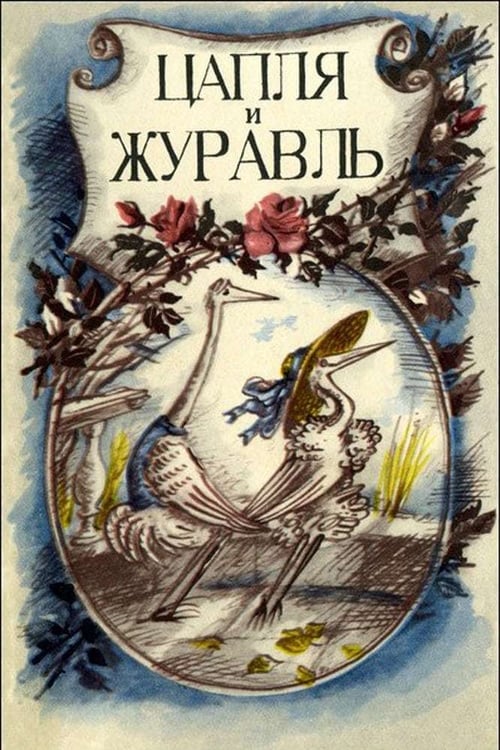
The Heron and the Crane
Plot
Animated short about a love between a heron and a crane.
Get the Weekly Woke Watchlist
New and trending movies scored for woke bias, preachy messaging, and forced political themes — before you waste your evening.
No spam. One useful email per week.
Overall Series Review
Categorical Breakdown
The characters are birds whose conflict is based on universal character flaws (pride and indecision) rather than immutable characteristics. The narrative is entirely divorced from race, whiteness, or intersectional hierarchy. Character judgment is based purely on their actions and psychological state.
The film draws directly from a traditional Russian folktale, reinforcing a specific cultural heritage. The setting, while depicted as a somewhat dilapidated marsh area, primarily serves as a melancholic backdrop for the characters' emotional isolation. It does not frame Russian/home culture as fundamentally corrupt or racist, nor does it promote a 'Noble Savage' trope.
The Heron's rejection of the Crane's proposal is rooted in 'haughty' pride, and the film equally critiques her vanity and the Crane’s reciprocal pride/hesitation. It portrays a failure to achieve the traditional goal of marriage/family due to mutual character defects, rather than celebrating a 'Girl Boss' figure or demonizing masculinity. The dynamic is one of flawed complementarianism that fails due to pride.
The short film centers on a male-female pairing (Crane and Heron) attempting to form a traditional union (marriage), which is the normative structure for relationships in the story. Sexual identity is not a factor, and there is no messaging regarding gender theory or deconstruction of the nuclear family.
As a secular parable based on folklore, the film has no engagement with, or hostility toward, traditional religion, specifically Christianity. The central theme of pride leading to isolation functions as a clear lesson in objective truth and moral consequence (regret) rather than promoting moral relativism.
Get the Weekly Woke Watchlist
New and trending movies scored for woke bias, preachy messaging, and forced political themes — before you waste your evening.
No spam. One useful email per week.