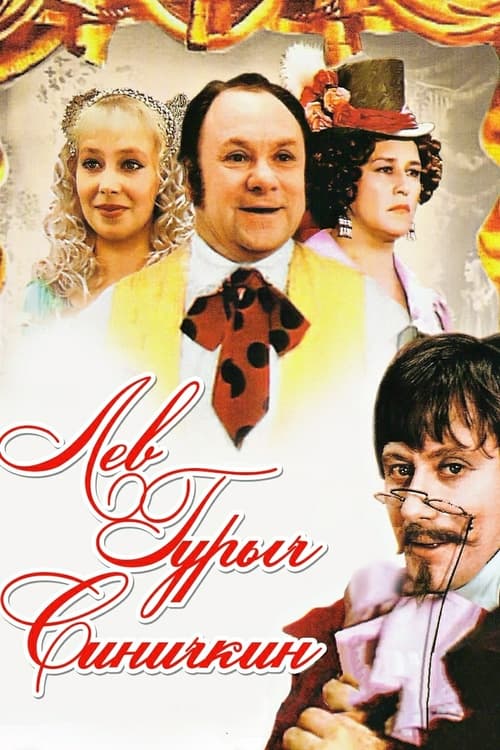
Lev Gurych Sinichkin
Plot
The old actor dreams of a leading role for his young talented daughter. However, she is opposed by a powerful diva of the troupe with a terrible character and great connections. After a series of efforts of the characters and hilarious misunderstandings, the old man's dream come true.
Get the Weekly Woke Watchlist
New and trending movies scored for woke bias, preachy messaging, and forced political themes — before you waste your evening.
No spam. One useful email per week.
Overall Series Review
Categorical Breakdown
The central conflict is talent versus corruption/influence, not based on immutable characteristics. Characters are judged entirely on their moral character (good father, talented daughter, evil prima donna) and artistic merit. Casting is authentic to the historical Russian theatrical setting, with no forced insertion of diversity or vilification of any demographic.
The film is an adaptation and celebration of a 19th-century Russian vaudeville, showcasing gratitude and respect for a long-standing national theatrical tradition. The satire is aimed at individual vanity and patronage within the theater, not at fundamentally corrupting the culture or civilization itself. Core institutions, like the family (father-daughter bond), are the source of strength.
The female lead, Lizonka, achieves success based on her talent, and the plot's emotional core is her father’s protective and strategic effort to help her. The powerful female antagonist, Surmilova, is a portrait of egotism and vanity, serving as a critique of power without merit, not a 'Girl Boss' celebration. The father is an active, supportive, and heroic figure, reinforcing positive masculinity. The family unit is celebrated as the emotional foundation of the story.
The narrative is a traditional comedy about theatrical ambition and heterosexual relationships. The central positive relationship is the normative male-female pairing of father and daughter. There is no presence of sexual identity being a central trait, no deconstruction of the nuclear family, and no lecturing on gender theory.
The film is a light-hearted vaudeville and does not engage directly with religious themes. The moral structure of the narrative, where the good, honest characters triumph over the self-serving and corrupt, affirms a clear sense of objective moral truth rather than moral relativism.
Get the Weekly Woke Watchlist
New and trending movies scored for woke bias, preachy messaging, and forced political themes — before you waste your evening.
No spam. One useful email per week.