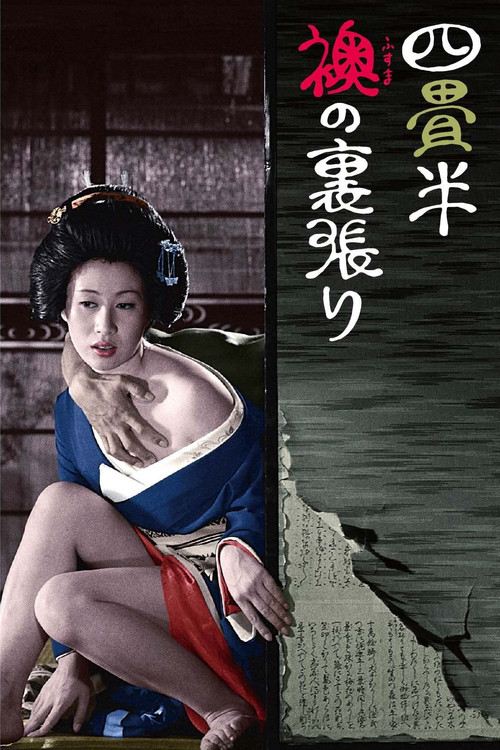
The World of Geisha
Plot
The world is in turmoil with the October Revolution of 1917, riots over the inflationary price of rice, and the military expedition to Siberia in 1918. But Shinsuke, a brothel owner, spends his days in the arms of geishas, paying little heed to the events happening around him.
Get the Weekly Woke Watchlist
New and trending movies scored for woke bias, preachy messaging, and forced political themes — before you waste your evening.
No spam. One useful email per week.
Overall Series Review
Categorical Breakdown
The film’s critique is directed toward social class, economic exploitation, and the political establishment within Japan. The characters are judged by their societal role or their emotional complexity, not on immutable characteristics or a modern intersectional hierarchy. The conflict is entirely internal to the Japanese system and does not engage in modern 'whiteness' vilification or forced diversity.
The director uses the film's structure to deliver a direct political commentary against the Japanese military's expansionist policies and government censorship of historical events like the Rice Riots. This constitutes a sharp and explicit self-critique of the 'home' nation's political and military institutions. The film does not, however, critique 'Western civilization,' but focuses on its own civilizational flaws at that time.
Women are portrayed as economically exploited figures whose lives closely resemble those of prostitutes, which is a critique of the patriarchal system, but the women are not depicted as instantly perfect 'Girl Boss' tropes. The central romantic arc ends in the geisha Sodeko marrying her client. Although critical of the women’s subjugation, the narrative does not promote an anti-natalist or anti-family message, balancing the raw depiction of exploitation with a personal quest for love.
The focus of the film is entirely on transactional and emotional male-female pairings within the context of the geisha house. The narrative operates within a normative structure, and there is no evidence of centering alternative sexualities, deconstructing the nuclear family as a political goal, or incorporating gender ideology lecturing.
The film’s themes are explicitly cited by critics as 'anarchy, and nihilism,' suggesting a world where life lacks inherent moral meaning. The narrative's constant juxtaposition of massive political chaos with raw, transactional sexuality points to a spiritual vacuum and profound moral relativism, where individual hedonism trumps any objective or transcendent moral law.
Get the Weekly Woke Watchlist
New and trending movies scored for woke bias, preachy messaging, and forced political themes — before you waste your evening.
No spam. One useful email per week.