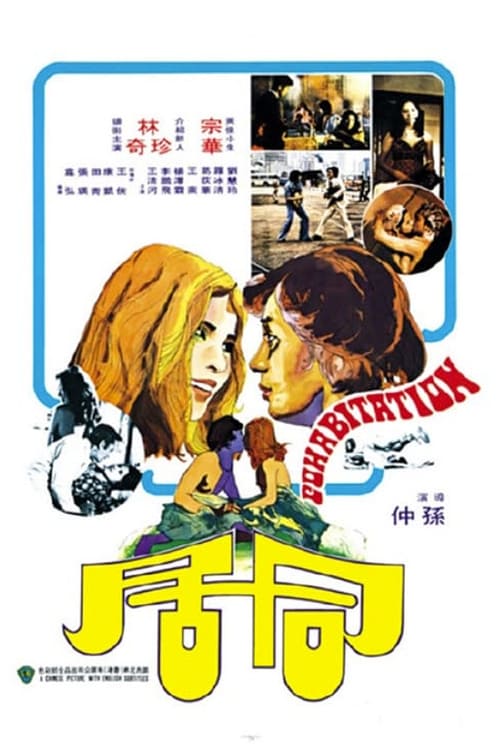
Cohabitation
Plot
Abortion, birth control and unwed cohabitation are social issues rarely associated with 1970's Hong Kong cinema. Cohabitation not only faces them head on but does so with insight, compassion and sex!
Get the Weekly Woke Watchlist
New and trending movies scored for woke bias, preachy messaging, and forced political themes — before you waste your evening.
No spam. One useful email per week.
Overall Series Review
Categorical Breakdown
The casting is entirely Chinese and historically authentic to the Hong Kong setting; there is no forced insertion of diversity or vilification of "whiteness." The dramatic conflict is purely generational, romantic, and socio-economic, focusing on individual choices in modern Hong Kong rather than immutable characteristics or intersectional grievance. Character merit and personal agency, not race or privilege, are the drivers of the plot.
The female protagonist's core motivation is a direct rebellion against the traditional Chinese family structure and the practice of arranged marriage, framing these heritage institutions as controlling and undesirable. This represents a deconstruction of a cultural institution. However, the film is set entirely within the local culture and does not resort to the "Noble Savage" trope or elevate any foreign civilization as morally or spiritually superior to the native Chinese/Hong Kong society.
The female lead is a forceful agent of autonomy, explicitly rejecting the traditional path of wife/mother set by her family to pursue an independent, career-focused life. The central, highly consequential action is her independent decision to get an abortion to protect the male partner's career, positioning motherhood as a potential obstacle or "burden" to fulfillment. The narrative centers the independent, anti-natal choice as a major plot point. The male lead is portrayed as emotionally neglectful and career-obsessed.
The narrative focuses exclusively on the relationship between a heterosexual man and woman, covering the social taboos of cohabitation, premarital sex, and unwed pregnancy. The film’s structure maintains the traditional male-female pairing as the standard and does not center alternative sexualities, deconstruct the nuclear family as oppressive, or engage with contemporary gender ideology.
The film's subject matter—celebrating unwed cohabitation, premarital sex, and the choice of abortion with "compassion and sex"—places it firmly on the side of moral relativism and against a traditional, transcendent moral law. The central conflicts are resolved through human emotion and secular social negotiation rather than through a reliance on faith or higher moral authority. Traditional religion is entirely absent as a source of strength or a moral guide; the focus is on subjective, man-made morality.
Get the Weekly Woke Watchlist
New and trending movies scored for woke bias, preachy messaging, and forced political themes — before you waste your evening.
No spam. One useful email per week.