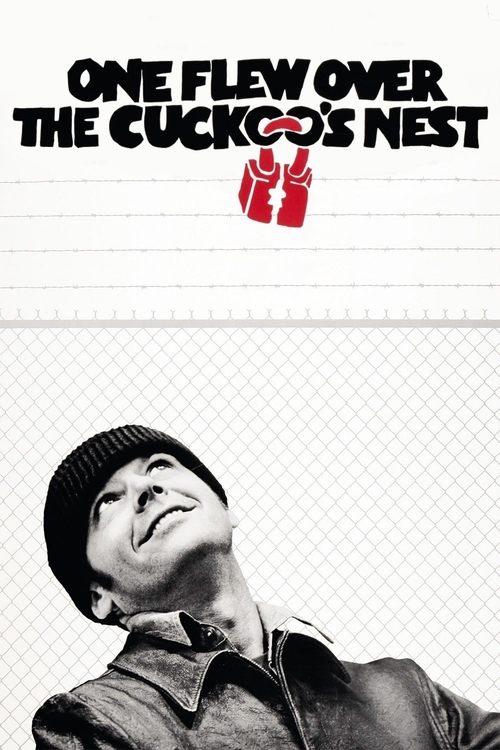
One Flew Over the Cuckoo's Nest
Plot
A petty criminal fakes insanity to serve his sentence in a mental ward rather than prison. He soon finds himself as a leader to the other patients—and an enemy to the cruel, domineering nurse who runs the ward.
Get the Weekly Woke Watchlist
New and trending movies scored for woke bias, preachy messaging, and forced political themes — before you waste your evening.
No spam. One useful email per week.
Overall Series Review
Categorical Breakdown
The main conflict operates on the universal theme of authority versus individual freedom, not on an intersectional hierarchy. Chief Bromden, a Native American character, is an important patient whose 'awakening' is a liberation from systemic oppression, introducing a clear race-based dimension to the critique of authority. Casting is not forced, but the central hero is an anti-hero judged by his actions of liberation, aligning mostly with merit and character rather than immutable traits.
The film's hostility is directed squarely at the specific American institution of the mental asylum, which is framed as a soul-crushing microcosm of modern, over-civilized, and authoritarian society (the 'Combine'). The message is anti-establishment and anti-bureaucracy, rather than a condemnation of Western civilization, family, or ancestors as a whole. The film implicitly values the natural state of man and radical individualism, which are foundational concepts in the Western liberal tradition.
The narrative is fundamentally *anti-feminist* in its structure. The villain, Nurse Ratched, is consistently portrayed as a 'castrating' figure and the embodiment of an oppressive matriarchal system that suppresses male vitality and sexual expression. The protagonist's primary goal is to re-masculate the men, and the positive female characters are sex workers, not 'Girl Bosses.' The film critiques the kind of rigid female authority that stifles natural male instinct.
The story adheres to a traditional male-female normative structure. Sexual expression is a theme, but it is focused on the heterosexual dynamic between McMurphy's virility and the repression of the male patients. There is no presence of alternative sexual identities, gender theory, or deconstruction of the nuclear family. Sexuality is largely private and used to symbolize individual freedom.
The film is neutral toward traditional religion, focusing its critique on secular institutional power. Randle McMurphy is explicitly framed as a Christ-figure or martyr, sacrificing himself to save the other patients, which invokes high, transcendent moral imagery to celebrate selfless action. The spiritual struggle is for human freedom against mechanical dehumanization, not a battle against religious belief. The score is mid-range because the morality is subjective (McMurphy's own code) but its culmination uses strong 'higher law' and sacrificial imagery.
Get the Weekly Woke Watchlist
New and trending movies scored for woke bias, preachy messaging, and forced political themes — before you waste your evening.
No spam. One useful email per week.