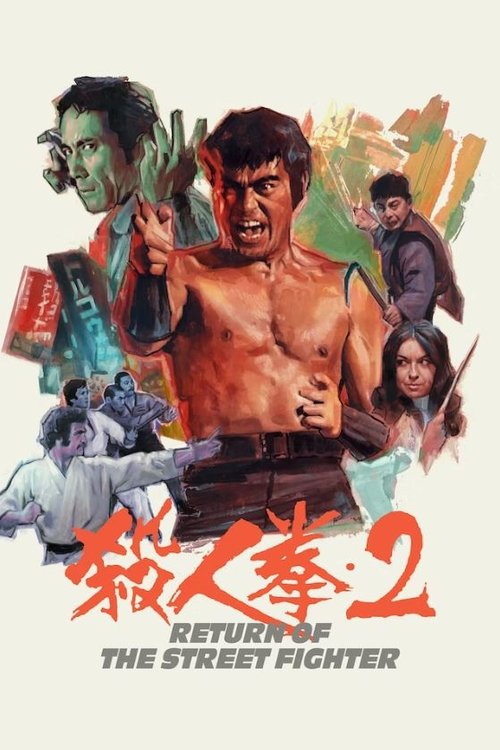
Return of the Street Fighter
Plot
Martial artist Takuma Tsurugi returns to take on a Yakuza family that may be embezzling money from charities to finance their own operations. Both the police and the Yakuza find themselves battling Tsurugi, but Tsurugi's fight ultimately is with the mob, and he concentrates on them.
Get the Weekly Woke Watchlist
New and trending movies scored for woke bias, preachy messaging, and forced political themes — before you waste your evening.
No spam. One useful email per week.
Overall Series Review
Categorical Breakdown
The film’s focus is on an individual's brutal code of martial arts and mercenary work over social concerns. The protagonist is half-Japanese and half-Chinese, a background that positions him as an outcast, but this serves as character motivation rather than a basis for a lecture on systemic oppression or privilege. All primary characters are Asian, with no presence of race-swapping or vilification of 'whiteness' as a narrative focus.
The film is a Japanese production, and the plot centers on fighting criminal elements (the Yakuza) operating within Japanese society. The target of the film's critique is internal corruption, specifically a Yakuza family embezzling from charities. The narrative does not contain hostility toward Western culture, and the plot is largely concerned with domestic underworld conflict.
The gender dynamics are the antithesis of the 'Girl Boss' trope. The film is a hyper-masculine exploitation feature where women are often sexualized, used as bait, or violently dispatched as antagonists. A female assassin is defeated by the protagonist in a bone-snapping battle, and there is no messaging promoting female perfection, male emasculation, or anti-natalism.
The narrative is a straightforward, brutal crime-action film and contains no evidence of alternative sexualities being centered. The film adheres to the traditional male-female pairing in its limited romantic/sexual elements. The plot is entirely devoid of deconstructing the nuclear family or introducing gender ideology.
The anti-hero’s crucial moral turn is prompted by a sense of honor toward a respected martial arts sensei/friend, Masaoka. This places the narrative on a foundation of traditional morality and a transcendent code of honor, even if the hero is personally amoral for much of the film. There is no hostility or critique directed at traditional religion, only a contrast between honor and Yakuza corruption.
Get the Weekly Woke Watchlist
New and trending movies scored for woke bias, preachy messaging, and forced political themes — before you waste your evening.
No spam. One useful email per week.