I Am a Cat
Plot
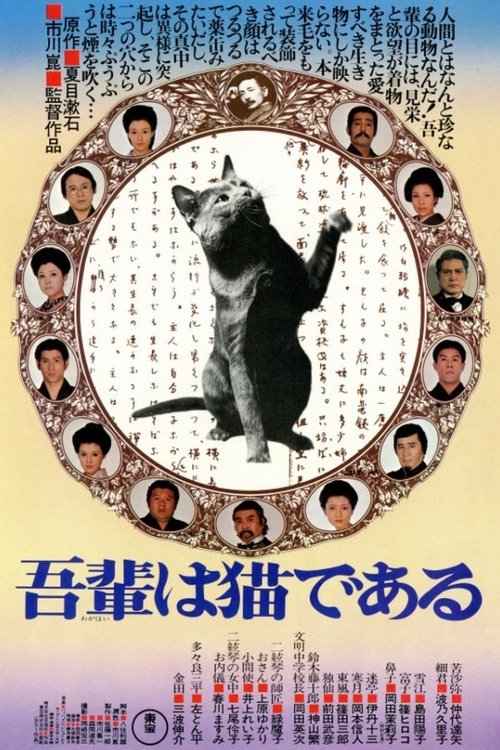
Nakadai is an English teacher at a local school. He’s put-upon like the patron figure of dozens of films and televisions shows. Viewers who are especially fans of Nakadai will appreciate how the actor comically rants about here. His home life is almost disastrous, with a ditzy (but attractive) wife, three young children, a loud school nearby that’s controlled by a corrupt businessman he loathes, and frequent visits from layabout friends. And the grey-furred, green-eyed cat!
Get the Weekly Woke Watchlist
New and trending movies scored for woke bias, preachy messaging, and forced political themes — before you waste your evening.
No spam. One useful email per week.
Overall Series Review
Categorical Breakdown
The narrative is a Japanese social satire focused entirely on Japanese class structure and intellectual vanity in the Meiji period, not modern Western identity politics. Characters are Japanese and their conflict is based on social status and intellect (teacher vs. businessman), not race or intersectional hierarchy. The casting is historically authentic to its setting.
The film criticizes the *superficial* adoption of Western culture (e.g., misquoting Western philosophy) by Japanese academics, which serves as a critique of Japan’s modernization path, not a demonization of the Western home or ancestors. It is internal societal critique, or 'Japanese self-criticism,' not civilizational self-hatred of the West. The film respects the integrity of the original Japanese setting and themes.
The character dynamics present traditional, complementary roles for men and women, albeit satirized. The male lead, Mr. Kushami, is depicted as bumbling, sick, and put-upon, while his wife is described as 'ditzy' but attractive, fulfilling a domestic and motherly role with three children. There is no presence of the 'Girl Boss' trope or anti-natalist messaging. The central conflict is the husband's intellectual life and rants.
The story adheres to a normative structure. The central relationships are the marriage of Mr. Kushami and his wife, and the heterosexual courtship of the scholar Kangetsu with the rich man's daughter. There is no presence of alternative sexual ideologies, deconstruction of the nuclear family, or lecturing on gender theory.
The movie has a philosophical current of nihilism, with the cat-narrator musing on the pointlessness of human existence and the cat's own life ending in an absurd, drunken death. This theme is an embrace of moral relativism and a spiritual vacuum, rejecting the idea of Transcendent Morality. However, the film does not specifically target or vilify Christianity or any other traditional religion, which lowers the score from the maximum.
Get the Weekly Woke Watchlist
New and trending movies scored for woke bias, preachy messaging, and forced political themes — before you waste your evening.
No spam. One useful email per week.