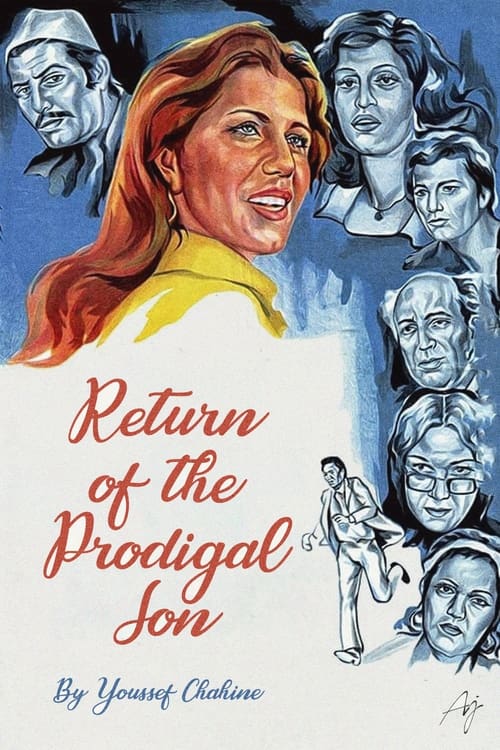
Return of the Prodigal Son
Plot
Freed after spending years in prison, an activist's homecoming turns into a dark affair as his disillusion clashes with his family's expectations. Demonstrating Chahine’s eclecticism, this is an elegant melodrama, exuberant musical, layered allegory, and profound portrait of personal and political disillusionment.
Get the Weekly Woke Watchlist
New and trending movies scored for woke bias, preachy messaging, and forced political themes — before you waste your evening.
No spam. One useful email per week.
Overall Series Review
Categorical Breakdown
Characters are judged by political failure, moral compromise, and competence in managing the family/town enterprise, reflecting a universal struggle for power and ideals. The cast and setting are locally authentic, avoiding any reliance on intersectional hierarchy or vilification of 'whiteness' as the core theme.
The film criticizes corruption, political failure, and the shattered hopes of the nation, allegorized through the broken family structure. This critique is internal to the Egyptian system, expressing profound national disillusionment with the modern state rather than hostility toward Western civilization or a fundamental deconstruction of deep cultural heritage.
The core conflict revolves around male-centric dynamics: the activist son, the tyrannical older brother, and the benevolent father. Female characters like the severe mother and a potential bride serve primarily within the context of the family unit, with no evidence of the 'Girl Boss' trope or explicit anti-natalist messaging.
The plot focuses entirely on political, economic, and traditional familial conflict, including a forthcoming wedding. There is no presence of alternative sexualities being centered in the narrative, nor is there any attempt to deconstruct the nuclear family as an oppressive structure.
The film’s title is a direct reference to a Christian biblical parable, and its moral critique is aimed at *political* corruption and personal apathy. There is no indication of hostility toward traditional religion or framing faith as the root of evil; the narrative explores a moral/spiritual vacuum caused by failed human idealism.
Get the Weekly Woke Watchlist
New and trending movies scored for woke bias, preachy messaging, and forced political themes — before you waste your evening.
No spam. One useful email per week.