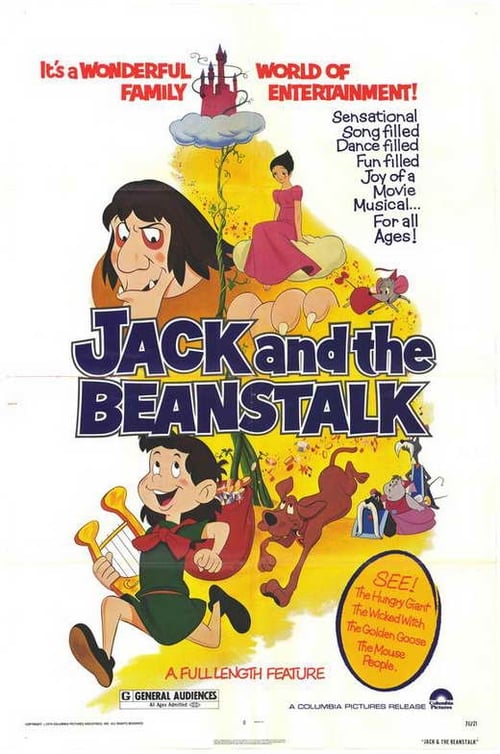
Jack and the Beanstalk
Plot
An adventurous young boy named Jack climbs a giant beanstalk to a magical kingdom governed by a greedy, tyrannical giant.
Get the Weekly Woke Watchlist
New and trending movies scored for woke bias, preachy messaging, and forced political themes — before you waste your evening.
No spam. One useful email per week.
Overall Series Review
Categorical Breakdown
Characters are judged purely on their moral actions and character merit; Jack is the resourceful hero, Prince Tulip is the greedy, 'slow and ugly' villain, and Hecuba is the wicked sorceress. The story is a classic hero's journey where a poor, humble boy triumphs over a giant-sized tyrant. There is no focus on immutable characteristics, vilification of 'whiteness,' or forced insertion of diversity. The conflict is simple good vs. evil.
The narrative structure is one of preserving and restoring a natural order. Jack's home and his kingdom are viewed as innocent spaces under threat from the external evil of the witch and giant. The film celebrates the values of his humble home and the ultimate triumph of the good kingdom's rightful ruler, which reinforces traditional institutions and core values against chaos.
Gender roles are complementarian and traditional for the fairy tale genre. Jack is the male protector and active hero, exhibiting courage and resourcefulness. Princess Margaret is the damsel in distress who is under a spell and needs to be rescued to restore the kingdom. The main antagonist is female (Madame Hecuba, the evil witch), who is explicitly driven by a villainous lust for power, not an endorsed 'Girl Boss' ambition. Jack's mother is a struggling widow but is ultimately saved by her son's actions, which celebrates the family unit.
The core relationship and resolution is a traditional male-female pairing (Jack and Princess Margaret). The nuclear family (Jack and his mother, the Princess and her royal family) is presented as the normative structure to be saved and restored. There is no presence of alternative sexualities, deconstruction of the family, or commentary on gender ideology.
The conflict is based on a clearly defined, objective moral struggle between good and evil, specifically magic-based villainy (the witch's power) and the heroism of Jack. The transcendent concepts of good and bad are clearly delineated. The film contains no hostility toward religion or any endorsement of moral relativism; the witch and giant are objectively evil forces that must be vanquished.
Get the Weekly Woke Watchlist
New and trending movies scored for woke bias, preachy messaging, and forced political themes — before you waste your evening.
No spam. One useful email per week.