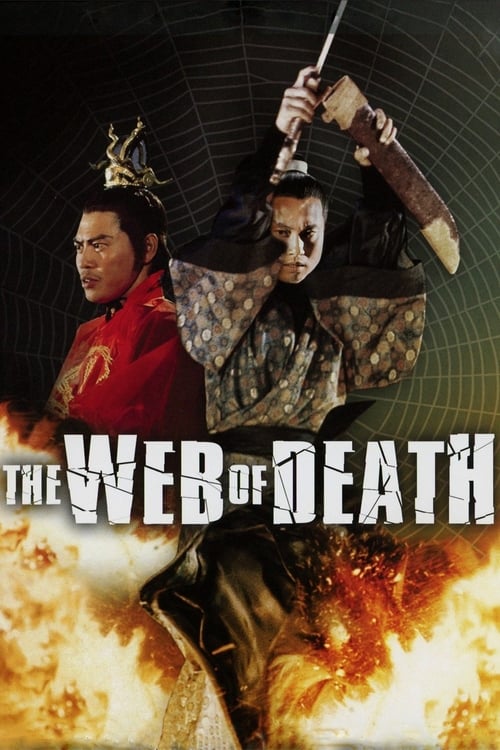
The Web of Death
Plot
Lo Lieh is the ringleader of the Snake Sect, intent on reviving a deadly faction known as the "Five Poison Web." In order to do so, he has an affair with the sexy ringleader of the Scorpion Sect, Angela Yu Chien. However, there is also the Centipede Sect to contend with, as well as other assorted martial artists, among them played by Shaw Brothers talents Yueh Hua, Ching Li, and Lily Li.
Get the Weekly Woke Watchlist
New and trending movies scored for woke bias, preachy messaging, and forced political themes — before you waste your evening.
No spam. One useful email per week.
Overall Series Review
Categorical Breakdown
The entire cast and setting are ethnically Chinese, and the conflict revolves around internal power struggles between rival martial arts clans, such as the Snake, Scorpion, and Centipede Sects. Character merit, fighting skill, and virtue define the hero (Fei Ying Xiang) and villain (Lo Lieh). The narrative contains no discussion or critique of race, white privilege, or systemic oppression, nor any forced diversity or historical 'race-swapping'.
The movie is set within a fantasy version of historical Chinese martial culture. The conflict focuses on the internal morality of the martial world (jianghu), specifically whether to use or suppress a dangerous ancient weapon. There is no hostility toward the home culture or ancestors, and the hero's goal is to uphold a traditional, righteous martial law against the villain's chaos. Institutions like the various martial arts clans are viewed as foundational structures, whether they are good or evil.
Male characters like the righteous swordsman Fei Ying Xiang and the villainous sect leader Lo Lieh are highly competent and powerful. Female characters, such as the Scorpion Sect ringleader Angela Yu Chien and the mysterious fighter Ching Li, are also depicted as strong, capable figures with fighting skills and political power. These dynamics present men and women as distinct, capable, and complementary figures in the power-struggle, and the plot includes a traditional love story, demonstrating no anti-family or anti-natal messaging.
The primary romantic plot is a traditional pairing between the virtuous male hero and a woman, and the antagonist is involved in a male-female affair. The core structure is a normative, heterosexual framework centered on traditional relationships. There is no presence of alternative sexual ideology, deconstruction of the nuclear family, or lecturing on modern gender theory.
The conflict is secular, rooted in the martial world's code of honor and the pursuit of power (the Five Poisons Spider). Morality is presented in clear objective terms as good versus evil—virtuous martial artists against treacherous and ruthless villains. The narrative does not contain any critique or hostility toward organized religion, specifically Christianity, and the theme of a righteous path strongly indicates an adherence to objective moral principles.
Get the Weekly Woke Watchlist
New and trending movies scored for woke bias, preachy messaging, and forced political themes — before you waste your evening.
No spam. One useful email per week.