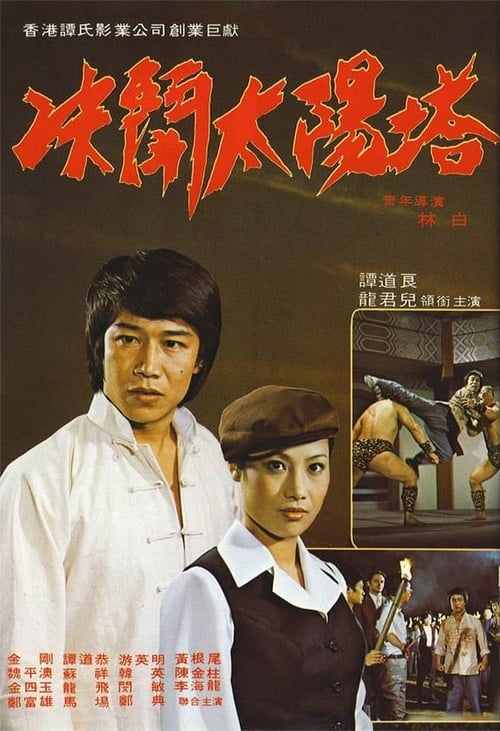
Duel with the Devils
Plot
As the daughter of the Chinese police chief, Angela secretly dresses up as a man to use her kung fu on Japanese troublemakers.
Get the Weekly Woke Watchlist
New and trending movies scored for woke bias, preachy messaging, and forced political themes — before you waste your evening.
No spam. One useful email per week.
Overall Series Review
Categorical Breakdown
The narrative is rooted in a historical and national conflict, portraying Chinese protagonists fighting Japanese antagonists during occupation. The casting and character portrayals are authentic to the setting and do not engage in the vilification of 'whiteness' or forced intersectional hierarchy that characterizes Western identity politics. The heroes are judged by their courage and merit in the fight against an external enemy.
The film explicitly rejects civilizational self-hatred by portraying the Chinese nation and its people as the victims of foreign military aggression. The main protagonist is motivated by the defense of his family and nation. The narrative champions the home culture and its institutions against an external, explicitly demonized foreign aggressor.
The score is slightly elevated by the female character, Angela, who dresses as a man to engage in combat, demonstrating a degree of 'Girl Boss' agency outside of her prescribed gender role. However, the central catalyst for the male protagonist is the kidnapping and murder of his wife and family, establishing a traditional hero-avenging-victim dynamic. The narrative does not contain anti-natalist messaging; rather, the nuclear family is the institution being defended.
The female lead's cross-dressing is a plot device used to facilitate her entry into the action and is not an exploration of sexual ideology or gender identity. The core narrative heavily features and seeks to restore the normative structure of the male-female pair and the nuclear family (husband avenging wife). There is no focus on queer theory, sexual identity as the most important trait, or deconstruction of biological reality.
The conflict is secular and nationalistic, focused on justice and revenge, not on religious ideology. Morality is objective, clearly dividing the good (Chinese resistance fighters) and the evil (Japanese occupiers). Faith is not a central theme, but the story's moral clarity and focus on universal justice do not engage in hostility toward religion or promote moral relativism.
Get the Weekly Woke Watchlist
New and trending movies scored for woke bias, preachy messaging, and forced political themes — before you waste your evening.
No spam. One useful email per week.