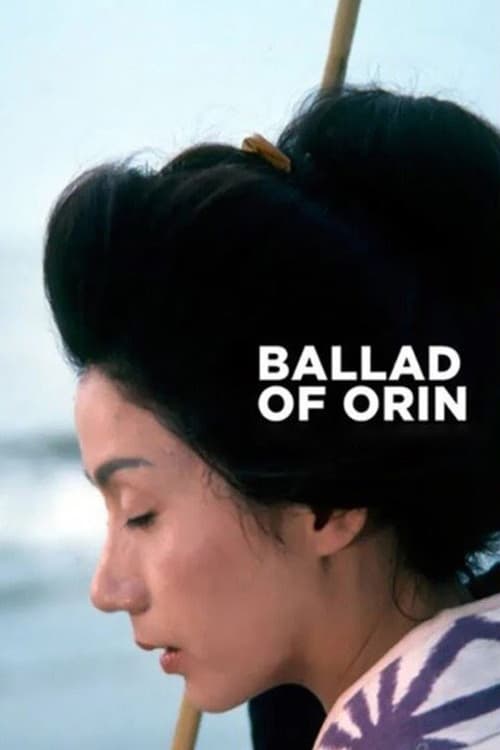
Ballad of Orin
Plot
A blind traveling musician is abused and oppressed wherever she goes, even as the modern world imposes change around her.
Get the Weekly Woke Watchlist
New and trending movies scored for woke bias, preachy messaging, and forced political themes — before you waste your evening.
No spam. One useful email per week.
Overall Series Review
Categorical Breakdown
The entire plot functions as a demonstration of systemic oppression, where the protagonist's suffering is directly caused by her immutable characteristics, specifically being a blind woman in a specific social class (goze) in a traditional society. The narrative focuses relentlessly on the hierarchy of suffering based on her intersecting identities as a disabled, abandoned, and sexually exploited woman.
The film presents the home culture of early 20th-century Japan as fundamentally corrupt and hostile to the vulnerable. Traditional institutions like the goze house, which are meant to provide protection, are shown to be cold and punitive, casting out the protagonist for a natural human desire (sex), even after she is a victim of abuse. The world of law-abiding men and established society is overwhelmingly rapacious, with the only virtuous male protector being an 'outlaw' and army deserter.
The core theme is the struggle of a woman in a repressive patriarchal society. The world is shown as a 'male world where abusing women is a right,' and the protagonist's only available paths in life are presented as inherently limiting or abusive: goze, masseuse, or prostitute. While the lead is not a 'Girl Boss' with instant perfection, her life is a powerful critique of the gender roles and institutions that fail women and punish their desire for companionship or sexuality. The one kind man is an army deserter, contrasting with the 'rapacious men' in positions of social power.
The story centers on a traditional male-female relationship, albeit an unconventional and tragic one. There is no inclusion of alternative sexualities, no deconstruction of the nuclear family through a queer theory lens, and no lecturing on gender ideology. The focus is strictly on the heterosexual desire and companionship sought by the protagonist.
The religious/traditional institution of the goze house, whose members live a 'monastic existence as brides of the Buddha,' is the direct source of the rigid rule that leads to the protagonist's expulsion and suffering. The narrative emphasizes the relentless, subjective cruelty and misfortune of her life, suggesting that morality is a matter of survival outside the punitive religious and social structures of the time, where faith itself is a restrictive force.
Get the Weekly Woke Watchlist
New and trending movies scored for woke bias, preachy messaging, and forced political themes — before you waste your evening.
No spam. One useful email per week.