The Hunters
Plot
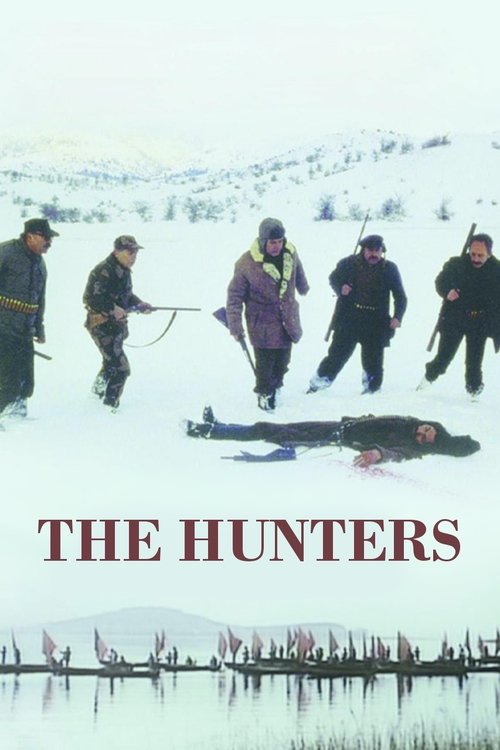
During a hunting party on New Year's Eve 1976, five representatives of the bourgeoisie encounter with their companion the body of a partisan from the Civil War of the late forties. What they are most confused about is the fact that the corpse that lies at their feet is still bleeding…
Get the Weekly Woke Watchlist
New and trending movies scored for woke bias, preachy messaging, and forced political themes — before you waste your evening.
No spam. One useful email per week.
Overall Series Review
Categorical Breakdown
The narrative explicitly employs a hierarchy based on political and class affiliation to determine moral standing. The entire 'bourgeoisie/ruling elite' is collectively put on trial for historical corruption, complicity with Nazism, and brutality against the Left, painting this established class as fundamentally evil and guilty. The film elevates the Partisan—a member of the marginalized, revolutionary class—as a nearly Christ-like symbol of unabsolved moral truth, judging the affluent characters by their past status rather than individual character merit.
The film functions as an explicit and powerful indictment of the Greek nation's established elite and its foundational post-war status quo. The director's stated intention is a 'study of the historical conscience of the Greek bourgeoisie,' which is 'afraid of history and, for this reason, hides it.' The story frames the home culture and its ruling structures as fundamentally corrupt and responsible for a 'collective nightmare of guilty conscience,' which is the essence of civilizational self-hatred directed inward at the nation's political and historical elite.
The female characters are included as 'types'—the colonel's wife, a film actress, a royalist noblewoman—and are defined by their status as members of the morally bankrupt ruling class. The critique leveled against them is a function of their political and class complicity, not their gender. The film does not feature 'Girl Boss' tropes, nor does it contain explicit anti-natalist messaging. The central conflict is political and historical, not a focus on gender dynamics.
The movie is a political and historical allegory with no discernible focus on alternative sexualities, queer theory, or gender ideology. The setting, style, and thematic concerns of this 1977 Greek film center entirely on class struggle and historical guilt, maintaining a normative structure by default of its subject matter.
The core of the film's story uses a powerful spiritual/religious metaphor: a dead body that is miraculously preserved and still bleeds. This image forces the characters to confront a transcendent moral law—an unabsolved sin and collective guilt—which cannot be ignored or rationalized. The presence of this 'symbolic mysticism' and 'moralistic code of ethics' explicitly asserts an objective moral truth, directly opposing moral relativism or hostility toward the concept of higher moral order.
Get the Weekly Woke Watchlist
New and trending movies scored for woke bias, preachy messaging, and forced political themes — before you waste your evening.
No spam. One useful email per week.