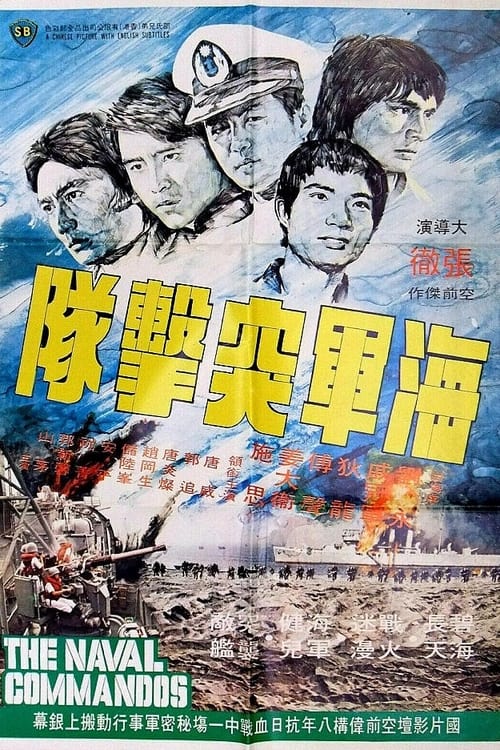
The Naval Commandos
Plot
The "Godfather Of The Kung-Fu Film" created this rousing epic of a seemingly suicidal mission to destroy the Japanese Navy's flagship in 1937, featuring many great actors he had worked with over the years. Their courageous and desperate attempts to do just that comprise the remarkable action in this rousing epic, featuring some of the greatest actors Chang had ever made, was making, and would ever make famous. (IVL)
Get the Weekly Woke Watchlist
New and trending movies scored for woke bias, preachy messaging, and forced political themes — before you waste your evening.
No spam. One useful email per week.
Overall Series Review
Categorical Breakdown
Characters are judged solely on their military merit and dedication to the mission. The conflict is an external, nationalistic struggle against an invading military force. The narrative does not utilize an intersectional lens, vilify 'whiteness,' or engage in 'race-swapping' as the cast and setting are historically authentic to the Chinese national context.
The film directly contradicts civilizational self-hatred by celebrating the immense courage and sacrifice of Chinese ancestors and servicemen defending their nation (home culture) against an aggressor. It frames core national institutions and the defense of the homeland as a noble and necessary act against chaos.
The story is an archetypal war epic centered on male commandos and their 'brotherhood.' Masculinity is portrayed as protective and vital to the mission's success. The narrative celebrates traditional male roles of military heroism and sacrifice. Women do not feature in 'Girl Boss' or 'Mary Sue' combat roles, and there is no messaging about anti-natalism or emasculation.
As a 1970s Hong Kong war film, the narrative maintains a normative structure. Sexual identity is not a thematic focus. The plot does not contain queer theory, deconstruct the nuclear family, or lecture on modern gender ideology. The focus remains on the military mission and platonic male bonding.
The moral framework is one of Transcendent Morality, where objective concepts like patriotism, self-sacrifice, and duty provide the moral foundation for the heroes' actions. The conflict is military and national, not a critique of traditional religion. There is no hostility toward faith or vilification of religious characters.
Get the Weekly Woke Watchlist
New and trending movies scored for woke bias, preachy messaging, and forced political themes — before you waste your evening.
No spam. One useful email per week.