Fairy Tales
Plot
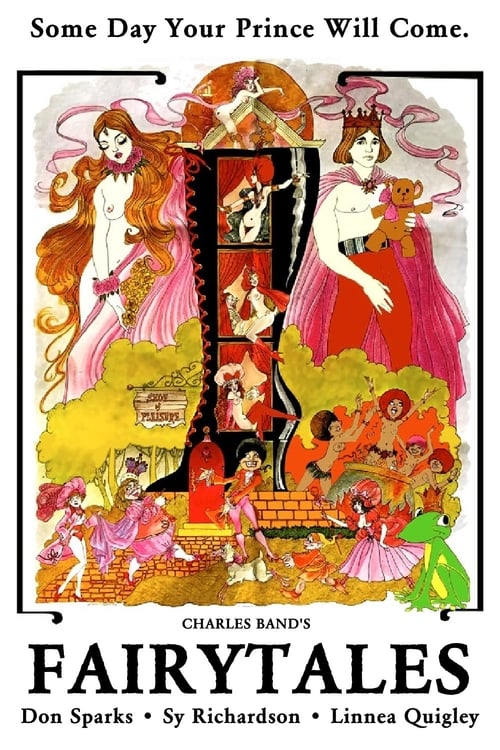
On his twenty-first birthday, the Prince goes on a quest that takes him across the land searching for the one woman that gets him sexually excited, Princess Sleeping Beauty.
Get the Weekly Woke Watchlist
New and trending movies scored for woke bias, preachy messaging, and forced political themes — before you waste your evening.
No spam. One useful email per week.
Overall Series Review
Categorical Breakdown
The plot does not revolve around intersectional grievance or systemic oppression, instead focusing on sexual farce. A Black character named Sirus, who is a pimp, explicitly demands not to be called 'boy,' which is a single race-conscious moment of dialogue. Black characters are also cast in supporting roles like a voodoo practitioner and a pimp, which represents unconventional casting in a traditional fairy tale parody, but there is no vilification of 'whiteness' or political lecture on privilege.
The film actively deconstructs and mocks Western cultural heritage by twisting beloved fairy tales and nursery rhymes into sexually debauched parodies. The classic institutions of folklore are vulgarized for comedic effect, with the Old Woman in a Shoe becoming a madam operating a brothel. This is a deconstruction of heritage, but for the sake of crude sex comedy rather than a political framing of the home culture as fundamentally corrupt.
The core plot is defined by a strongly anti-anti-natalist and traditional message: the Prince must secure his crown by successfully siring an heir, which he achieves through the final union with the Princess. The female characters are almost universally depicted as sexual objects or caricatures in the brothel setting, the inverse of a 'Girl Boss' trope. The male lead is initially emasculated by his impotence, but the entire quest is dedicated to restoring his masculine vitality and fulfilling his role.
The narrative's resolution strongly affirms the traditional male-female pairing and nuclear family structure as essential for the kingdom’s survival. There is a single, casual joke mentioning a male character, Jack, is gay as a punchline for the frustration of his female partner, Jill. This briefly acknowledges alternative sexuality but does not center it, preach any queer theory, or frame the nuclear family as oppressive.
The film occupies a complete spiritual vacuum, entirely lacking any transcendent moral framework in favor of crass, amoral sexual pursuits and humor. This inherent moral relativism, where the highest value is sexual performance and gratification, places the film high on the scale. However, there is no explicit hostility toward or direct vilification of Christian figures or traditional religion.
Get the Weekly Woke Watchlist
New and trending movies scored for woke bias, preachy messaging, and forced political themes — before you waste your evening.
No spam. One useful email per week.