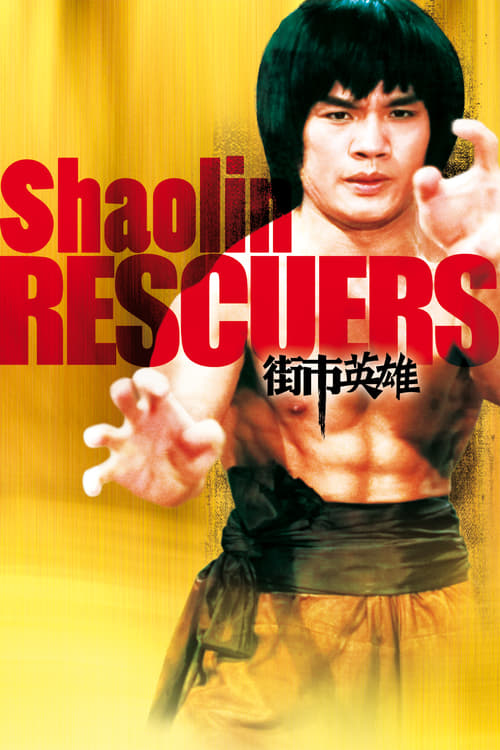
Shaolin Rescuers
Plot
Two friends who long to be heroes join the fight against a Ching warlord and his students. They get help from a Kung Fu student and a rebel. They also save Hung Si Quan's life.
Get the Weekly Woke Watchlist
New and trending movies scored for woke bias, preachy messaging, and forced political themes — before you waste your evening.
No spam. One useful email per week.
Overall Series Review
Categorical Breakdown
The story is rooted in a historical ethnic and political conflict between Han Chinese rebels (Shaolin) and Manchu oppressors (Ching Warlord). Characters are judged by their martial arts skill, their courage, and their moral loyalty to the rebellion. The narrative championing meritocracy and moral conviction is central to the heroic journey.
The film explicitly defends an ancestral institution, the Shaolin Temple, and its heritage of martial arts against a tyrannical regime. The heroes are motivated by a desire to protect and preserve their own culture and people, framing the 'home culture' of the Han resistance as a source of justice and heroism.
The core of the story revolves entirely around male camaraderie and martial arts brotherhood, which is standard for the genre and the director’s work. Women are largely absent from the central heroic narrative and action. There is no presence of 'Girl Boss' tropes, anti-natalism, or emasculation of the male characters. Masculinity is portrayed as protective and vital to the rebellion’s success.
No content related to sexual ideology, alternative sexualities, or gender theory is present in the plot. The focus is exclusively on the historical conflict and martial arts action, maintaining a normative structure by default. Sexuality is a private matter and not a topic for the narrative.
The conflict is based on a fight to avenge the destruction of the Shaolin Temple, a spiritual institution. While one of the primary villains is a corrupt and traitorous monk, the heroes' cause is to uphold the moral and spiritual law associated with the Shaolin tradition. Faith and a sense of objective moral truth are acknowledged as the basis for the heroes' strength and the conflict itself.
Get the Weekly Woke Watchlist
New and trending movies scored for woke bias, preachy messaging, and forced political themes — before you waste your evening.
No spam. One useful email per week.