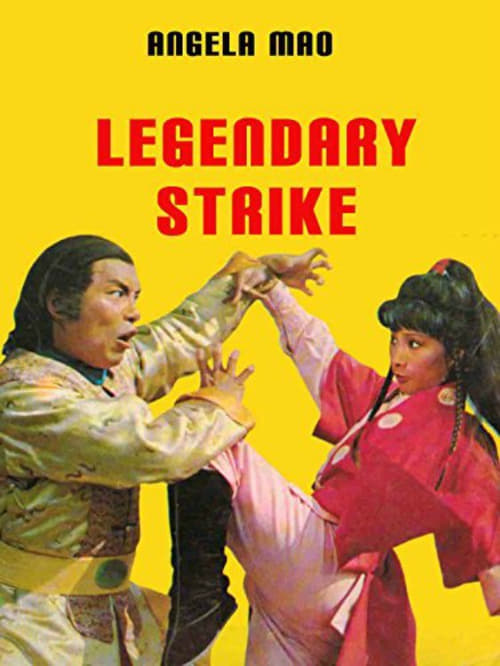
The Legendary Strike
Plot
The plot deals with a search for a valuable pearl, dubbed the Buddha's Relic, which is sold to an unwitting Japanese emissary by a corrupt Ching Dynasty prince who seeks to steal it back for his own purposes.
Get the Weekly Woke Watchlist
New and trending movies scored for woke bias, preachy messaging, and forced political themes — before you waste your evening.
No spam. One useful email per week.
Overall Series Review
Categorical Breakdown
Characters are judged by their actions and competence in martial arts, not by immutable characteristics. The central conflict is between a corrupt Ching Prince and Ming patriots who seek to restore a perceived legitimate order. The narrative focuses on political loyalty and individual merit. The cast consists entirely of East Asian actors, making race-focused political commentary irrelevant to the film’s themes.
The narrative criticizes the ruling establishment of the time, the Ching nobles, who are shown as corrupt and willing to sell sacred national treasures. This is a critique of a tyrannical regime, not a denigration of Chinese civilization or heritage itself. Characters fighting the corrupt state, the Ming rebels, are patriots working to protect a Chinese relic and a local village. External cultures, like the Japanese and Koreans, are presented as characters in the political intrigue, not as morally or spiritually superior civilizational models.
The movie features a major female protagonist, Angela Mao, who is portrayed as a highly skilled fighter and a Korean rebel/Ming-sympathizer. She is more than evenly matched against her male adversaries, demonstrating competency and physical prowess. The male lead is also an able character, and there is no pattern of deliberate emasculation. The focus is on combat skill and political goals; motherhood and career are not themes in the plot.
The movie is a 1978 martial arts and adventure film. The plot focuses entirely on a political treasure hunt involving a holy relic, a corpse, and martial arts combat. There is no presence of alternative sexual ideology, a focus on sexual identity, or any deconstruction of the nuclear family. Traditional male-female pairing and the normative structure remain standard and are not subject to any form of critique or political commentary.
The central object of the entire plot is the 'Buddha's Relic,' a sacred pearl. A Shaolin monk is a key figure who allies with the heroes, acting to protect the relic and the interests of the monastery. Traditional religion, specifically Buddhism, is presented as a positive moral force that the virtuous characters seek to uphold against the corruption of the state. The narrative acknowledges the existence of a sacred object and a moral imperative.
Get the Weekly Woke Watchlist
New and trending movies scored for woke bias, preachy messaging, and forced political themes — before you waste your evening.
No spam. One useful email per week.