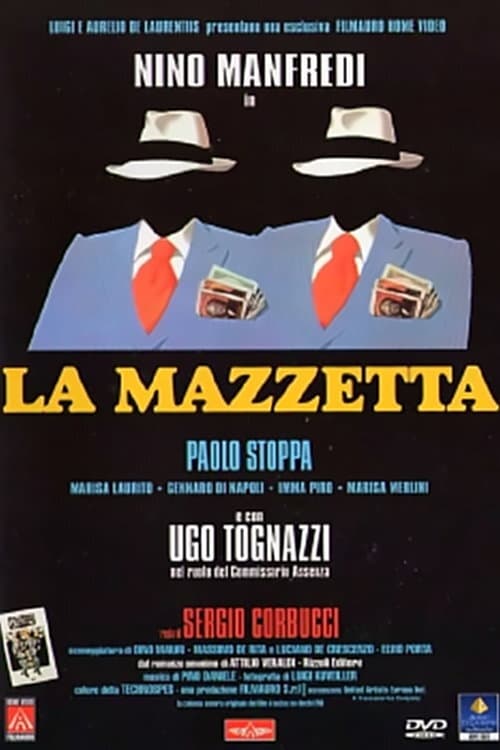
The Payoff
Plot
Sasà Jovine (Nino Manfredi) is a self-styled lawyer involved in petty businesses with Neapolitan mobsters (camorristi). When one of his clients, don Michele Miletti (Paolo Stoppa) offers him a huge bribe (mazzetta) to search for his daughter who disappeared mysteriously taking with her some hot documents, Sasà finds himself trapped into a spiral of homicides.
Get the Weekly Woke Watchlist
New and trending movies scored for woke bias, preachy messaging, and forced political themes — before you waste your evening.
No spam. One useful email per week.
Overall Series Review
Categorical Breakdown
The narrative is centered on a small-time Neapolitan Italian operator navigating a web of crime, corruption, and financial greed. Characters are defined by their moral choices, profession (criminal or police), and class status, not by race or immutable characteristics. The casting is historically authentic to its Italian setting. There is no forced insertion of diversity, vilification of 'whiteness,' or lecturing on intersectional privilege.
The film offers a strong, comedic, yet cynical portrait of Neapolitan society and its institutions, highlighting systemic corruption within the construction industry and the impotence of the justice system due to the Camorra. This is a severe criticism of local Italian failure, but it is an internal critique of a specific system's corruption, not a wholesale condemnation of core Western civilization, its ancestors, or its philosophical foundations (liberty, nation, family).
The female characters are mixed. The daughter, Giulia, demonstrates strong personal agency by stealing incriminating documents and refusing to return to her corrupt father. Her final act is to move away to raise her child in peace, a choice which celebrates motherhood and independence rather than framing a career as the only fulfillment. The male lead’s girlfriend, Luisella, is portrayed as 'half-loony' but is also proactive and an active helper in the investigation, placing the gender dynamics in a complementary but traditional space.
The core of the film’s plot is centered on a traditional male-female pairing (the protagonist and his girlfriend) and the pregnant daughter's flight from her corrupt father. The movie contains no explicit presence of alternative sexualities, queer theory, gender ideology, or deconstruction of the nuclear family as an 'oppressive' structure.
The protagonist, Sasà Jovine, is an amoral anti-hero driven purely by 'the payoff' (La mazzetta) with no interest in restoring justice, reflecting a worldview of moral relativism and pervasive cynicism. This focus on amorality implicitly rejects Objective Truth and a higher moral law. However, there is no direct hostility toward religion (Christianity); a priest character is listed in the cast, but the plot is focused on crime and corruption, not spiritual conflict or religious characters as villains/bigots.
Get the Weekly Woke Watchlist
New and trending movies scored for woke bias, preachy messaging, and forced political themes — before you waste your evening.
No spam. One useful email per week.