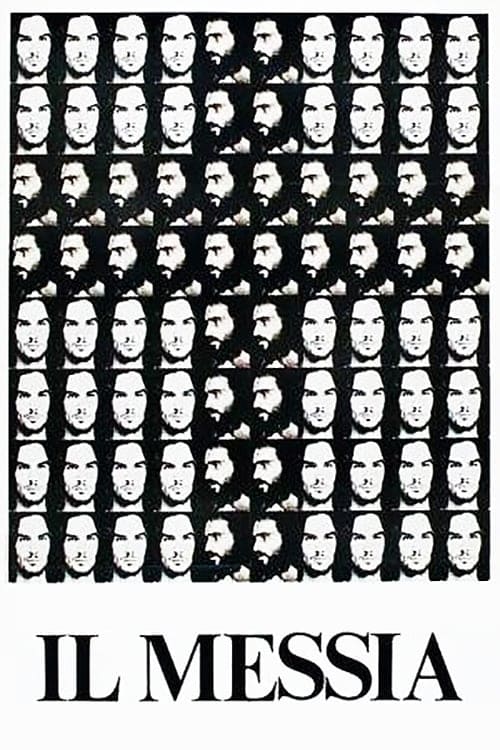
The Messiah
Plot
Rossellini takes numerous liberties with the original source material, rearranging and omitting events at will, presenting everything in a highly undramatic fashion. The film begins in the time of the Old Testament, allowing Rossellini to present the story of Jesus in its ancient, historic context.
Get the Weekly Woke Watchlist
New and trending movies scored for woke bias, preachy messaging, and forced political themes — before you waste your evening.
No spam. One useful email per week.
Overall Series Review
Categorical Breakdown
The narrative's focus is on a political and historical critique of the ancient Jewish elite, contrasting the corrupt power of leaders like Herod with the common people and Jesus. One critic noted an 'anti-Semitic taint' in the portrayal of this historical in-group's leadership, which is a form of vilification. The casting and character definitions, however, are based on historical roles and not on contemporary intersectional race and privilege lectures.
The film explicitly deconstructs the foundational political heritage of the Israelites, beginning the narrative with a long prologue to argue that the people’s desire for an earthly king was a fundamental error that led to centuries of tyrannical rule. Institutions of power within the home culture, namely kingship and the corrupt Jewish leadership, are framed as fundamentally flawed, which Jesus's message is meant to counteract.
Gender roles are presented as traditional and complementary, consistent with the biblical setting and the film's 1975 production. The narrative focuses on showing women, such as Mary, engaging in quotidian activities like making bread. There are no elements of the 'Girl Boss' trope, no emasculation of males to elevate women, and no anti-family or anti-natal messaging.
The narrative adheres strictly to the normative structure of its time and source material. The story centers on traditional male-female pairings and the nuclear family unit. There is no presence of alternative sexual identities, queer theory, or gender ideology lecturing.
The director, a self-professed atheist, intentionally reinterprets the life of Christ through a purely humanist, secular lens. Miracles, such as walking on water, are omitted, and Jesus is reduced to a 'cipher,' a 'mildest, most recessive rabbi,' in a deliberate attempt to remove the transcendent and divine. The ultimate message is re-framed around secular 'faith in man' and the suggestion that 'heaven might already be here in the form of a worker's paradise,' replacing objective transcendent morality with a subjective, political ideology.
Get the Weekly Woke Watchlist
New and trending movies scored for woke bias, preachy messaging, and forced political themes — before you waste your evening.
No spam. One useful email per week.